


I believe everyone is naturally curious about how advanced China is in science and technology, and how it compares with the rest of the world.
Back in 2015, I wrote a lengthy article titled How Fast Is China’s Scientific and Technological Power Catching Up With the United States(中国科技实力正以多快的加速度逼近美国)? Eleven years have passed since then. Over that period, I have witnessed China’s scientific and technological capabilities soar—and global interest in the subject surge just as dramatically. Much of what has unfolded over the past eleven years is precisely what I predicted in that article. In some respects, though, reality has proved even more astonishing than the most optimistic forecasts. What a remarkable time to be alive.
Over the years, I have given many lectures and presentations on this subject. I used to describe the situation in essentially the same way every time: China still lagged far behind the United States, but its scientific and technological capabilities were broadly on a par with those of other major powers, including Britain, France, Germany, and Japan. Among these countries, China’s rate of growth was unquestionably the fastest.
This year, however, I think that description needs updating. We should now say that China leads the world in the rate at which its scientific and technological capabilities are expanding, even as it still has considerable ground to make up in its accumulated scientific achievements.
One milestone stands out: China has overtaken the United States in the Nature Index.
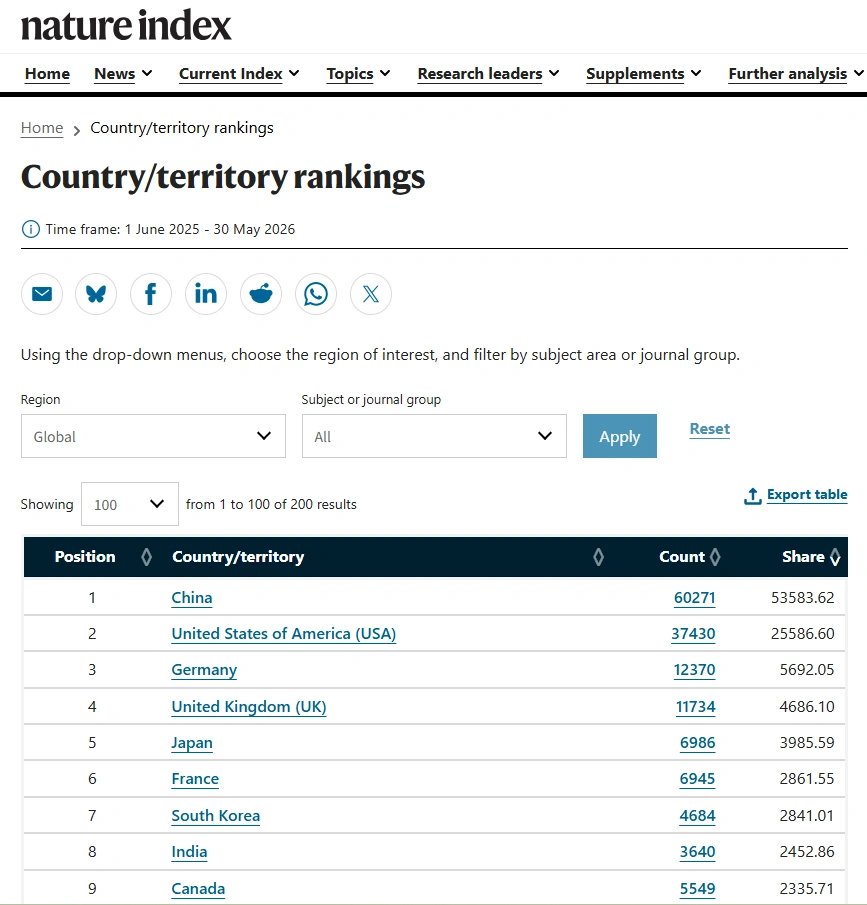
What is the Nature Index? Developed by the leading scientific journal Nature, the index tracks the research output of countries and institutions in selected fields. Its methodology is remarkably straightforward. Scientists in different fields are asked which journals they consider the leading publications in their disciplines and where they would submit their best work first. The responses help identify the leading journals in each field. The index then counts the papers published in those journals each year by researchers affiliated with each country or institution. That is the basic idea.
The Nature Index’s greatest strength is its relative objectivity. Once the journals included in the index have been selected, the calculation itself leaves little room for subjective judgment. Many other rankings, by contrast, rely so heavily on subjective judgments that they become little more than a game of semantics: if you want a particular country to rank first, you can devise a methodology that gets you there. I’m sure plenty of examples come to mind, right?
When I first wrote my article in 2015, Nature had only just launched the Nature Index. What did the rankings look like back then? The United States was in first place, as one would expect. China came in second, which was a surprise. But the gap between the two was enormous: the US score was 3.58 times China’s. Germany ranked third, with China’s score just 1.28 times its own.
For years afterward, the top three remained the United States, China, and Germany. The biggest change was China’s rapid pursuit of the United States, often posting double-digit percentage growth while gradually pulling away from Germany. The real contest was for fourth place, where Britain, France, and Japan kept trading places.
I grew accustomed to this picture when giving presentations. Then, a few years ago, the rankings underwent a dramatic shift: China overtook the United States to claim the top spot!
So which year did China overtake the United States? Here’s the twist: the answer could be 2022 or 2023, depending on how you count.
To understand why, we need to consider which fields the Nature Index covers. When Nature first introduced the index, it tracked 82 leading journals across four fields: chemistry, Earth and environmental sciences, life sciences, and physical sciences.
By that definition, China overtook the United States in 2022. But Nature then decided to include health sciences, adding another 65 leading journals to the index. The United States had an overwhelming lead in health sciences. Everyone has probably heard the joke: the rich rely on technology, while the poor rely on mutations. And just like that, a change in the rules put the United States back on top of China! Who would have thought?
But as the old saying goes, a strong furnace can keep burning despite a few cold drafts. For a system expanding as rapidly as China’s, such “technical adjustments” are little more than a sideshow. Just one year later, China had overtaken the United States again, even under the expanded definition. At first, China’s lead was only 14%. Then the gap widened rapidly.
The latest Nature Index figures put China’s score at more than twice the US score. Has China really been growing that fast? Not entirely. An even more important factor is that the Nature Index has been revised yet again this year to include applied research, whereas previously it covered basic research alone. China is particularly strong in applied research, so adding it to the index has further extended China’s lead.
But as soon as we bring up the Nature Index, an obvious question arises: Does this mean China’s science and technology have already surpassed those of the United States? That doesn’t quite square with our intuition, does it?
Exactly. That’s why I always have to explain what the Nature Index measures—and what it doesn’t. It measures the flow of new output, not the stock of accumulated achievements; total output, not per-capita performance; and publication in leading journals, not the very highest level of scientific accomplishment.
The Nature Index counts papers published in leading journals over the course of a single year. Clearly, that measures what has been added in one year, not the accumulated stock of knowledge and achievement built up over the course of history. It’s much like what I’ve heard from numerous experts I’ve interviewed. Many experts have told me that their laboratories once lagged far behind their overseas counterparts in equipment, but that their facilities can now rival the best in the world. That’s certainly a welcome development. But this level of capability has only been achieved in the past few years. However impressive their recent output may be, Chinese laboratories cannot yet match the accumulated body of work of the world’s leading research institutions.
When it comes to accumulated scientific achievements, one of the most obvious indicators is the Nobel Prize.
In recent years, Chinese people have frequently argued that the Nobel Prize doesn’t matter, that it’s merely a political tool. We’ve even seen sour-grapes remarks along the lines of “foreign awards are not a measure of China’s level of development.” Such arguments simply fail to distinguish between the different awards.
The Nobel Prizes in Literature, Peace, and Economic Sciences, are open to various criticisms and can sometimes even be seen as misleading indicators. The Nobel Prizes in Physics, Chemistry, and Physiology or Medicine, however, remain highly prestigious and scientifically significant.
More than 600 scientists have received Nobel Prizes in the natural sciences. How many of them have been Chinese scientists? If we use a broad definition that includes ethnic Chinese scientists such as Yang Chen-Ning, Tsung-Dao Lee, and Samuel Ting, who won their Nobel Prizes while conducting research overseas, the total stands at nine. Under a stricter definition, counting only scientists whose Nobel-winning research was conducted in China, there is just one: Tu Youyou.
In fact, the latter is the indicator we should pay the most attention to. Consider the recent achievement of Chinese mathematicians Wang Hong and Deng Yu, who won the Fields Medal. Their wins were undoubtedly significant achievements. But both were working abroad when they did the research recognized by the award. China has yet to produce a Fields Medalist whose prize-winning work was carried out at a Chinese institution. That is the goal we need to work toward next.
Now consider the United States. How many Nobel Prizes in the natural sciences have American scientists won? However one counts, the total exceeds 200. The gap is substantial and undeniable. If we want to advance China’s scientific and technological capabilities, we must first acknowledge the gap, face it squarely, formulate plans on the basis of facts, and work hard to close it.
The right way to understand the Nobel Prize is this: most Nobel Prizes recognize work done decades ago. What matters now is to produce more Nobel-caliber breakthroughs, so that Chinese scientists may win Nobel Prizes in greater numbers decades from now.
The truly meaningful question, then, is this: Which scientific and technological achievements in China today have the potential to win a Nobel Prize? Answering that question, however, requires serious scientific expertise.
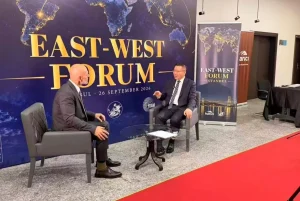
I used to find this question difficult to answer myself. In recent years, however, my work on Maodian (Anchor to the Future), a program produced in collaboration with Shanghai Media Group, has given me an unusual opportunity to explore this question. For each episode, I visit a leading scientist in a particular field, tour their laboratory, and then sit down for an in-depth interview.

“Anchor to the Future” is a technology observation program aired by Dragon TV every Wednesday at 10:00 p.m. starting January 1, 2025. Hosted by Yuan Lanfeng of the University of Science and Technology of China, the show invites scientists from China and abroad to focus on cutting-edge technology fields such as artificial intelligence and quantum […]
The remarkable thing about Maodian is that it is a weekly program. Viewers can watch it on Shanghai’s Dragon TV every Wednesday at 10 p.m. In practice, that means researching a new field and conducting an in-depth interview with a scientist almost every week.
At first, I wondered how we could possibly manage it. But after exploring every option we could think of, and with the hard work of the production team and the help of many scientific experts, we made it happen! We have now interviewed some 70 to 80 experts across an extraordinary range of fields, from mathematics, physics, and chemistry to Earth sciences, astronomy, biology, AI, robotics, and even the search for extraterrestrial life.
So if you ask me today which Chinese scientific and technological achievements have the potential to win a Nobel Prize, I can give you quite a few examples. I cannot predict whether any particular line of research will ultimately earn a Nobel Prize, or when that might happen. What I can do is judge whether the work has the originality and scientific significance that could make it Nobel-worthy—or whether it falls short of that standard.
In chemistry, my own field, Chinese researchers have proposed concepts such as single-atom catalysis, nanoconfined catalysis, and aggregation-induced emission.
In medicine, research into diagnosing and treating neurological disorders such as Parkinson’s and Alzheimer’s diseases is advancing rapidly.
In physics, the detection of dark matter, a measurement of the absolute neutrino mass, or the development of practically useful quantum computing could each merit a Nobel Prize.
In astronomy, the discovery of an Earth-like exoplanet—often dubbed “Earth 2.0″—would be a historic scientific achievement.
Another striking development is that the now widely discussed concept of AI for Science was actually proposed by Chinese scientists. Using AI to accelerate scientific discovery is becoming a major research frontier—and an opportunity for China to pull ahead.
Another basic principle applies here: you cannot do cutting-edge science without cutting-edge tools. In many fields, China previously lacked advanced experimental facilities, which meant it could not realistically produce cutting-edge research results. Today, however, China is rapidly expanding its portfolio of large-scale research facilities and advanced scientific instruments.
Consider Hefei, the city is building BEST, a next-generation fusion research facility, along with the Hefei Advanced Light Facility, a synchrotron radiation source. By 2030, China could become the first country to achieve a sustained fusion reaction that releases more energy than it takes in. If achieved, that would be a scientific breakthrough of far greater practical significance than any Nobel Prize.
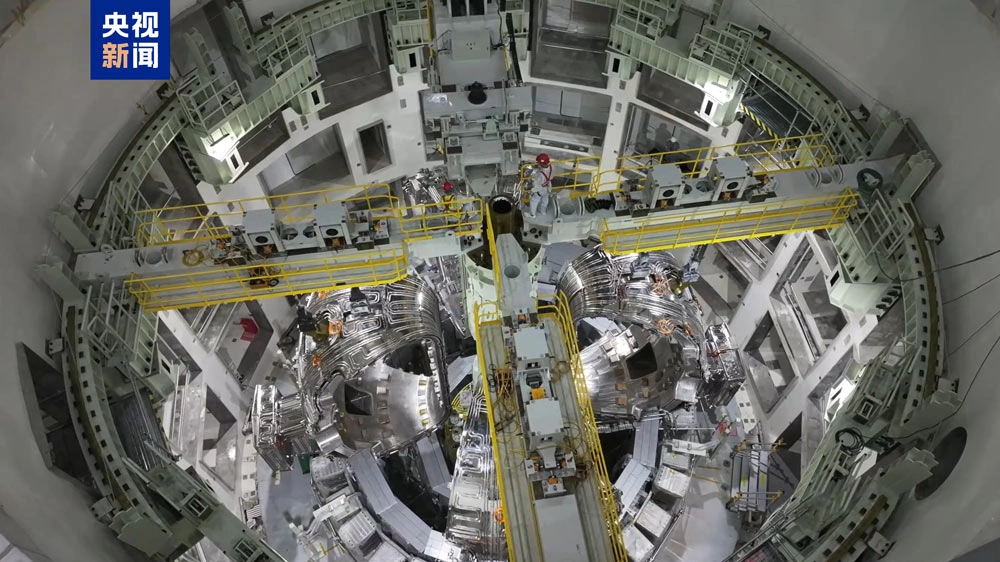 The Burning Plasma Experimental Superconducting Tokamak (BEST) is a compact, high-field superconducting tokamak under construction in Hefei, the capital city of Anhui, a Eastern Chinese province. It is designed to conduct deuterium–tritium (D–T) fusion experiments and investigate Burning-plasma, a state in which the energy deposited in the plasma by fusion-produced alpha particles provides a significant […]
In 2018, I delivered a talk at the Chinese Academy of Sciences’ Gezhi Forum titled “What Is True Confidence (真正的自信是什么)?” I argued that Chinese science was enjoying its strongest standing in the world at that very moment. That statement still holds today—and holds more strongly than ever. China is advancing rapidly across the full spectrum, from basic science to applied technology.
Editor: Chang Zhangjin