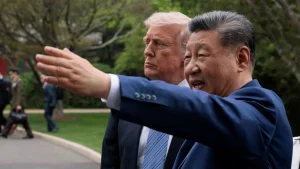


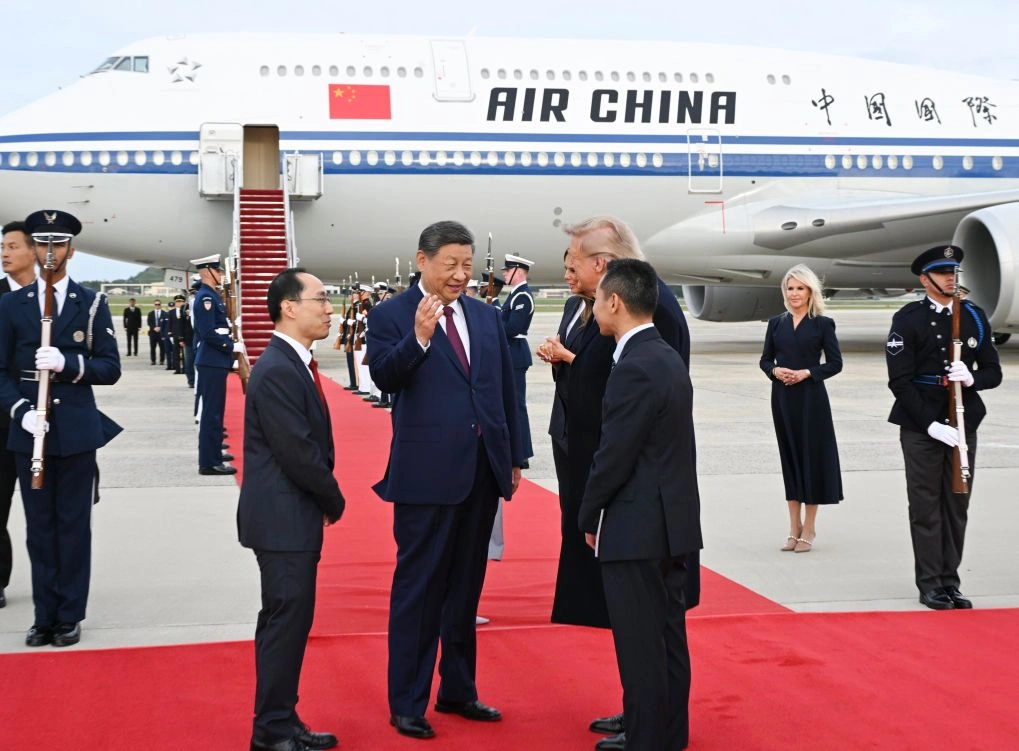
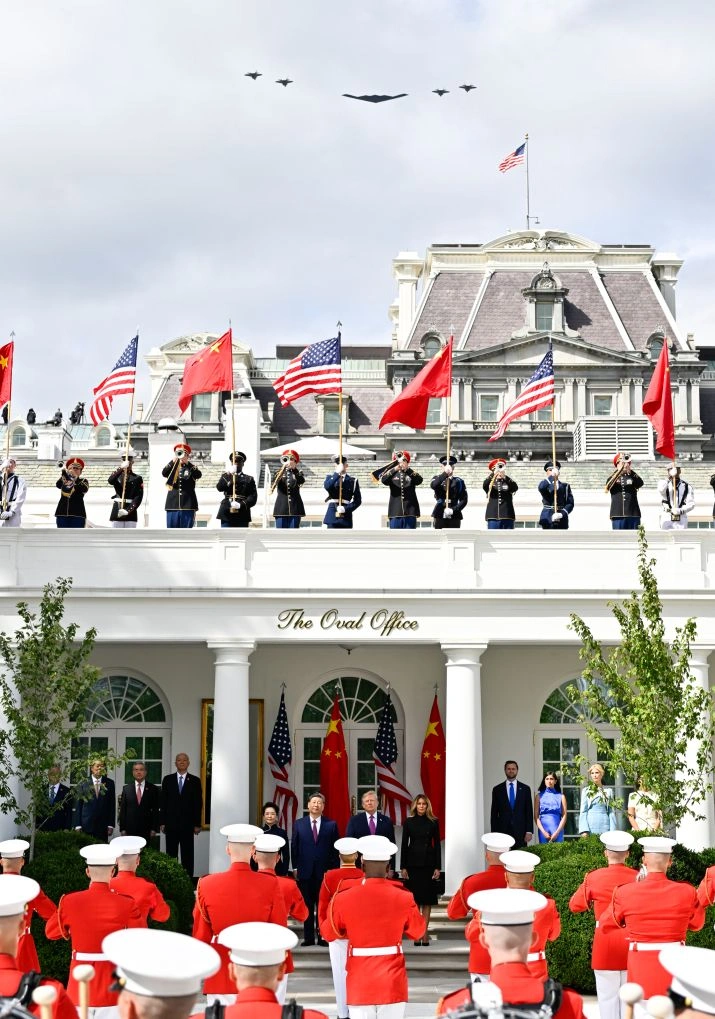
Recently, an unusual scene unfolded in Washington: U.S. President Trump personally went to the airport to welcome visiting President Xi Jinping. This broke nearly six decades of U.S. protocol for receiving foreign heads of state; the last person to receive such treatment was a visiting pope, and before that, one would have to go all the way back to the Kennedy era.French media offered a rather scathing post-event commentary: Trump isn’t ignorant of protocol; he simply believes some people—such as Macron—aren’t worthy of it.
This is the same Trump who, during his first term, waged all-out trade and technology wars against China, with flip-flopping being as common as daily routine; this time, however, he extended the highest level of hospitality seen in nearly six decades. Why did he make this about-face? How does the “constructive U.S.-China strategic stability relationship based on respect, fairness, and reciprocity” established by both sides differ from previous arrangements?
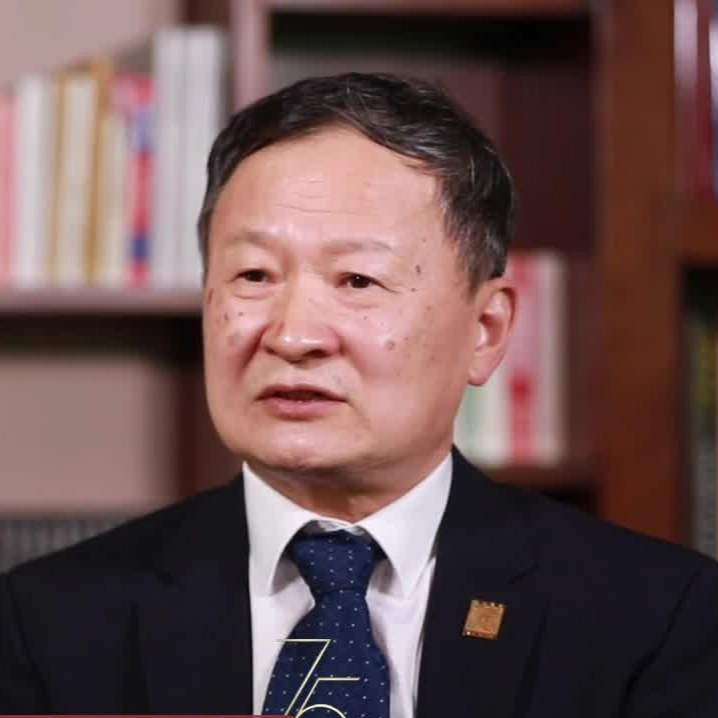
Professor Wang Xiangsu, a Chinese strategist and Deputy Secretary-General of the CITIC Reform and Development Research Foundation, pointed out that the “constructive U.S.-China strategic stability relationship based on respect, fairness, and reciprocity” established during this visit rests entirely on the four words “mutual consensus”—whereas the past “new type of major-country relationship” was a unilateral expectation on China’s part, this time the U.S. has truly committed to it in earnest.As for how this consensus came about, Wang Xiangshui cut to the chase: it wasn’t that Trump suddenly became a better person; rather, China used its strength and determination to gradually “set his behavior straight.”
I. Trump Finally Admits: China Is an “Equal Rival”
To understand this shift, we must first examine how Trump misjudged the situation during his first term. Back then, he was convinced that as long as the U.S. took action, it could limit China’s development to a low level where it “could not challenge the U.S.” Consequently, he launched wave after wave of trade and technology wars. In reality, however, China’s national strength has undergone a tremendous transformation, and it has become a strategic rival on equal footing with the U.S., possessing comparable capabilities.
This time, Trump has truly witnessed this transformation in China. One detail is worth noting: Senator Rubio—once the most anti-China figure and a target of Chinese sanctions—has now publicly stated that China is the world’s most important major power, and that it is unthinkable not to engage with such a power or establish normal relations with it. The fact that even Washington’s most hardline anti-China figures have changed their tune indicates that the notion that “China’s strength deserves respect” has become a consensus among U.S. decision-makers.
But what truly made Trump hold back was, in fact, the respect China earned through repeated confrontations. During the trade war, when he threatened to raise tariffs to extremely high rates, China responded with reciprocal countermeasures, making its stance crystal clear: if you want to fight, we’ll see it through to the end.After several rounds of confrontation, the Americans discerned two key points: first, China is not afraid of competition and is a capable, equal adversary; second, China is “courteous, powerful, and measured”—even when holding the upper hand, it does not make exorbitant demands but only fights for what it must secure. U.S. Vice President Vance once remarked that China, as an adversary, “has performed well.”
Wang Xiangsu noted that this is akin to a chess match: both sides are world-class masters with comparable skill levels; more importantly, it is the composure displayed during the contest—requiring not only skill but also poise—that earns your opponent’s genuine respect. As for Trump’s considerations based on personal political needs and other factors, these are secondary.
This strength, which has “finally been recognized,” also means that the new proposals put forward by the U.S. carry far more weight than its previous verbal statements.
II. From “One-Sided Wishful Thinking” to “Mutual Consensus”
The “new type of major-country relationship” is an old phrase from many years ago, but ultimately it represented a unilateral expectation on China’s part—one that the U.S. did not necessarily share. As for a “constructive strategic stability relationship based on respect, fairness, and equality,” China had actually raised this during Trump’s previous visit to China; this time in Washington, with the two heads of state face-to-face, they formalized it as a consensus.
This consensus is not merely empty rhetoric. “Respect,” as reflected in protocol, manifested in a warm welcome unprecedented in sixty years; “equality” was evident in the mutual consideration of concerns—with issues such as the drug problem, a priority for the U.S., and the arms embargo on Taiwan, a priority for China, being discussed on an equal footing. Furthermore, what was particularly noteworthy was the candor in the two leaders’ remarks. Whereas in the past, both sides tended to speak past one another, this time they finally found common ground.President Xi stated directly that both China and the U.S. do not shy away from competition, but that competition must be constructive and have boundaries—it should be a race where both sides strive to catch up with one another, not a zero-sum game where one side loses and the other wins. The bottom line of competition is no conflict and no confrontation. Wang Xiangsui pointed out that this has already risen to the level of political philosophy—namely, the pursuit of the unity of opposites and competitive coexistence.
With this new relationship as a foundation, the specific provisions in the eight-point consensus become even more thought-provoking.
III. Two subtle implications are hidden within the eight-point consensus
During this visit, China and the U.S. agreed to support each other in successfully hosting diplomatic events on their respective home turf. This implies that the top leaders of both countries will meet four times within a year, and this unprecedented frequency of diplomatic engagement is undoubtedly beneficial to global stability.The most significant provision in the Eight-Point Consensus is that both sides reaffirmed the historical memory of their alliance during World War II. Just days before President Xi’s visit, the Japanese Prime Minister had visited the White House during the United Nations General Assembly, attempting to elevate the Japan-U.S. alliance above U.S.-China relations; yet during World War II, the United States and China were allies primarily in the fight against Japanese fascism.Subtly bringing this history to the forefront effectively serves as a clear warning to those who seek to borrow the tiger’s might to intimidate others and retrace old paths. Coupled with the two sides’ shared positions on the Iranian nuclear issue and tolls on international waterways, what lies behind this is, more importantly, its exemplary significance: when China and the U.S. reach consensus on global issues, it helps prevent further deterioration and propels matters in a positive direction. This may well become a new model for resolving complex global political challenges.
However, having dealt with Trump for so many years, even with such impressive results before our eyes, any level-headed observer cannot help but ask: How long will he honor this agreement?
IV. From “True Scoundrel” to “Short-Sighted Gentleman”
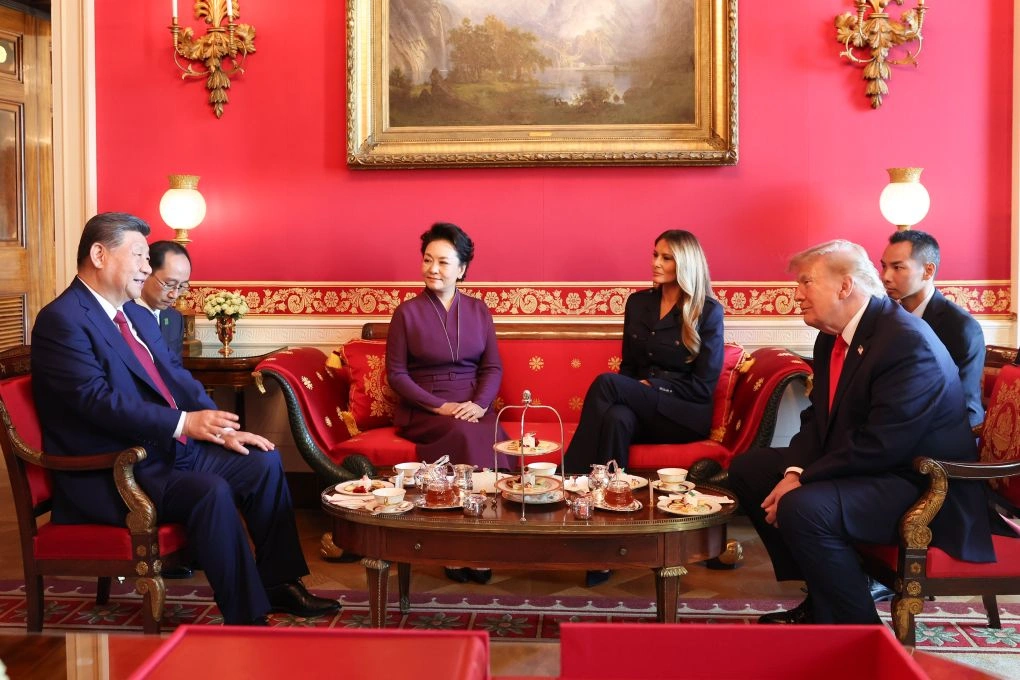
First, let’s take a look at Trump’s track record of trustworthiness. After his last visit to China, the atmosphere was so positive that some international media outlets claimed “China and the U.S. are entering a honeymoon period,” only for Trump to launch a trade war the moment he returned to the U.S. In the minds of many, breaking his word is the norm for him: before his plane has even touched down, he’ll post a tweet on Twitter, rendering his previous statements null and void.
We cannot pin our hopes on Trump’s credibility improving, as “asking for the moon and settling for a fraction” has already become his philosophy of negotiation. Fortunately, China has grown accustomed to Trump’s tactics. If you greet us with a smile, we’ll respond in kind; but if you want to start a fight, we’ll be more than happy to play along.
There’s a telling detail this time: after the trade war ceasefire, China proposed a one-year extension, but ultimately only secured a six-month agreement—from September to January. This timeframe is actually very short, which shows that Trump was never prepared to hold off on taking action for the long term; he still treats the trade war as a bargaining chip he can pull out at any moment. But viewed from another angle, this is precisely where the change lies.Trump is no longer in a “ready to strike tomorrow” mindset; instead, he has publicly agreed to a ceasefire period and is prepared to abide by the rules for these six months. Therefore, we must also recognize that he is making an effort to enhance his credibility.
Wang Xiangsu’s assessment of this situation is quite measured; he points out that Trump has transformed from a “true villain” into a “minor gentleman” or “short-term gentleman.” However, this does not mean he has undergone a complete transformation; rather, China has used its strength and resolve to constrain—and even “correct”—Trump’s governance—you cannot change your mind on a whim; you must keep your word.Even if it’s only six months of keeping his word, it’s still keeping his word.
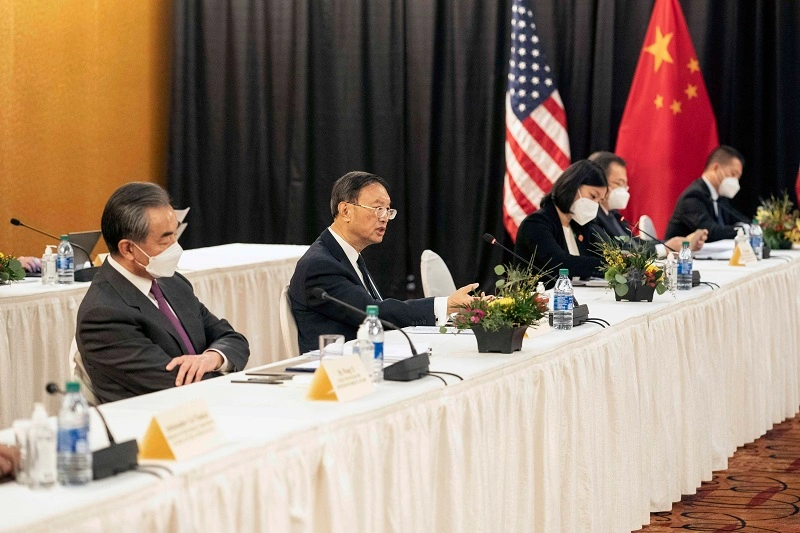
This visit can be described as a milestone in U.S.-China relations. Professor Wang Xiangsu shared a story told by a veteran diplomat.Back when Jiang Zemin’s visit to the U.S. was being arranged, during working-level discussions with the American side, the Americans presented two “baskets”: one for economic issues and one for political issues. They indicated that while their leader was welcome to visit, the visit would only be considered finalized once both baskets were filled with their concerns. That reflected the mindset of a “supreme empire” waiting for others to pay their respects.Today, however, the United States has extended the highest-level reception in nearly six decades. The progress made in bridging this gap has been achieved step by step through China’s strength. Furthermore, regardless of whether the next U.S. president is a Democrat or a Republican, high-level exchanges between China and the United States will most likely take place against a backdrop of mutual respect and fairness and equality—and will not return to the era when Blinken dealt with China from a position of U.S. superiority, as he once told Yang Jiechi.
Editor: zhangyixincq