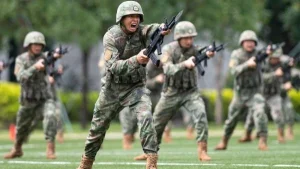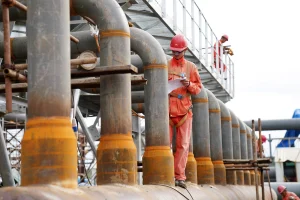


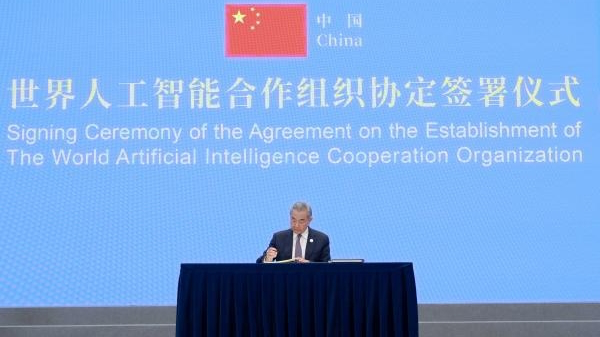
In today’s crisis-ridden world, China can be seen as one of the world’s most important positive forces. In terms of security, without China, we might already have been drawn into a world war, and East Asia would never have enjoyed the peaceful development it has experienced in recent decades. Economically, from the 2008 global financial crisis and the trade war launched by Trump in 2018 to the COVID-19 pandemic, the Russia-Ukraine conflict, and the US-Israel-Iran wars, the global economy has been repeatedly subjected to severe shocks. Fortunately, China, as a major engine of global growth, has helped keep it going. Technologically, artificial intelligence has posed unprecedented challenges to humanity. Recently, the World AI Cooperation Organization was established in Shanghai, with China taking the lead in addressing these challenges.
A popular saying on Chinese social media captures this vividly: “The world is falling apart, while China is patching it up.” We may not fully appreciate this when we are in the midst of events ourselves, but many international observers have begun to recognize that today’s world can no longer do without China’s empowerment. This is why, since last year, Chinese media and academia have increasingly explored a new concept: “A Great Power That Empowers.”
What does “empowerment” mean in this context? My definition is as follows: it refers to a country’s external strategic behavior that substantively enhances the autonomous operational capabilities of other countries through resources, technology, security commitments, or institutional platforms. This definition may sound somewhat unusual. After all, aren’t the strategic actions of any country ultimately intended to serve its own national interests? How, then, could a country actively enhance the capabilities of others?
Looking back at the ancient world, this was indeed the prevailing pattern. Different civilizations were either isolated from one another or engaged in life-and-death competition. Under peaceful conditions, transportation and trade were natural forms of interaction among civilizations, generally motivated by mutual gain, but there were few deliberate efforts to empower others externally. The global expansion of capitalism created a predatory, exploitative, and enslaving world system. Although it objectively disseminated some advanced productive forces and modern forms of social organization, its fundamental purpose remained to serve the interests of the suzerain states. The damage inflicted on the colonies far outweighed the capacity-building effects that were transferred to them; there was therefore no net empowerment.
Beginning in the twentieth century, however, an embryonic form of net empowerment began to emerge. Especially after World War II, a phase emerged in which global empowerment, represented by the United Nations, coexisted with bloc-style empowerment led by the United States and the Soviet Union. Under the Cold War order, for example, both the United States and the Soviet Union needed to provide a certain degree of empowerment to their allies in order to compete for influence, giving rise to systems of bloc-style empowerment. The US Marshall Plan for Europe, US assistance to the industrialization of Japan and South Korea, and Soviet assistance to China’s industrialization—particularly the well-known “156 Projects”—are all typical examples. Yet this form of empowerment was subject to strong political conditions and was highly unstable.
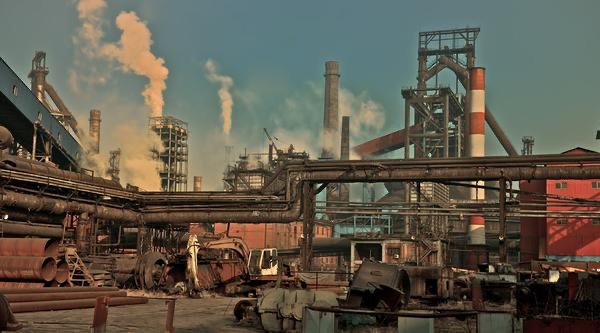
After the collapse of the Soviet Union, the world entered a period of unipolar hegemony. Some international institutions that had originally belonged to the Western bloc began to evolve into global institutions. The General Agreement on Tariffs and Trade (GATT), for instance, was a multilateral trade framework initially centered on Western countries and later succeeded by the World Trade Organization (WTO). This process of “globalization” objectively played an empowering role for countries around the world, as illustrated by China’s rapid development after joining the WTO. Yet these institutions remained embedded in a Western-dominated order, and as US hegemony has declined, their capacity to perform this empowering function has also weakened rapidly. In recent years, for example, the WTO’s dispute settlement mechanism has been paralyzed, severely undermining its ability to empower. At the same time, US-led bloc-style empowerment has also been deteriorating. From Trump’s treatment of US allies to developments in the Russia-Ukraine conflict and the US-Israel-Iran wars, the disintegration of the US-led bloc has become increasingly apparent.
In short, before 2010, the empowering activities undertaken by major powers, including the United States and the Soviet Union, were primarily driven by their own economic interests, geostrategic calculations, hegemonic competition, and ideological objectives. They therefore represented forms of center-dependent empowerment. By contrast, since the beginning of reform and opening up, and particularly since entering the twenty-first century, China has increasingly sought to empower the world and individual countries. Especially since the outbreak of the COVID-19 pandemic, China has demonstrated a growing willingness and capacity to pursue empowerment on the basis of equality, mutual benefit, and decentralization. Against the backdrop of developments including the China-US trade war, the technology war, the Russia-Ukraine conflict, and the US administration’s global tariff policies, China’s positioning as an “Empowering Great Power” has emerged at a particularly significant moment and has attracted growing international attention.
The Chinese character “能” (néng) refers, on the one hand, to the capacity for autonomous development and, on the other, specifically to energy. China is now proposing a new solution at the foundational level of human civilization, and this is potentially revolutionary. Historically, almost every form of human civilization has depended on a particular form of energy. In this narrower sense, China’s empowerment means providing a new model of energy.
Let us consider the characteristics and causes of the “Empowering Great Power”. In China’s foreign policy and concepts of global governance, we have long expressed, in various ways, the idea that Chinese modernization is a form of modernization that empowers the world. For example, in 2024, President Xi Jinping stated that “China does not pursue modernization for itself alone,” clearly indicating that the path of Chinese modernization is intended to empower the world and other countries. The world order China seeks is not a form of center-dependent hegemony, but peaceful and orderly multipolarity through genuine multilateralism. Such multipolarity is an equal, multicentered network structure.
Why do we pursue such a world order? First, as a civilizational state, China’s millennia-old tradition as a settled and advanced civilization means that we do not seek predatory and oppressive hegemony, because such hegemony would ultimately harm us as well. Therefore, China will never pursue the kind of hegemonic replacement seen in Mediterranean history, nor will it seek bipolar hegemony or G2-style co-governance.
Second, as a socialist country, our internationalist tradition means that we have consistently stood with developing countries and the Global South. Today, China has become the world’s most powerful industrial country, but we absolutely cannot practice imperialism. Therefore, we cannot simply remain within the global value chain created by Western-style globalization; instead, we must build a mutually beneficial, win-win global network with the rest of the world. Empowering others is also a way of empowering ourselves.
Finally, the multicentering of the global power structure also reflects the distributed, decentralized, and diversified development of contemporary productive forces, modes of production, technology, energy, and transportation. New technologies such as artificial intelligence and renewable energy, for example, are increasingly decentralized in nature and therefore call for a network-based global governance structure.
China’s positioning as an “Empowering Great Power” is a scientific positioning that conforms to the laws of human historical development. The “Empowering Great Power” is a major-power phenomenon emerging with a new form of human civilization. Its realization must differ from the great-power transitions that occurred within the modern world capitalist system. It will not come through war or any form of sudden rupture, but will instead follow the broad trajectory of economic and technological development and accord with the logic of historical materialism. Through cooperation and gradual reform, it will ultimately contribute to a new world order and a new form of human civilization.
What is the world-historical significance of the “Empowering Great Power”? I am reminded of the Eastern Han classicist He Xiu, who, drawing on the three stages associated with the Spring and Autumn Annals, developed a philosophy of history known as the “Three Ages Theory” (Sanshi Shuo). The first stage is called the “Age of Decline and Disorder” (Shuailuan Shi), later renamed by Kang Youwei as the “Age of Disorder” (Juluan Shi). In this stage, internal and external boundaries are distinct, and the world is marked by wars, usurpations, and the collapse of ritual and music. Its governing principle is “treating one’s own state as the inside and the other Xia states as the outside” (Nei Qi Guo Er Wai Zhu Xia), meaning that vassal states prioritize themselves and regard other states as opponents or outsiders.
The second stage is the “Age of Approaching Peace” (Shengping Shi), in which society enters a period of Xiaokang, or moderate prosperity. The Huaxia world moves toward peace and order internally, while barriers remain externally. Its governing principle is “treating the Xia states as the inside and the barbarians as the outside” (Nei Zhu Xia Er Wai Yi Di), meaning that the Huaxia states are regarded as insiders and the barbarians as outsiders.
The third stage is the “Age of Universal Peace” (Taiping Shi), in which society enters the stage of Great Harmony (Datong). Civilization spreads throughout the world, and its governing principle is “all under Heaven, regardless of distance or size, are as one” (Tianxia Yuan Jin Da Xiao Ruo Yi), signifying the transcendence of boundaries between Huaxia and the barbarians and the sharing of one common human family.
Although the “Three Ages Theory” was a social ideal proposed by our ancestors in antiquity under the constraints of their historical knowledge, and has long been superseded by our materialist conception of history, it remains significant in the history of Chinese thought, and its progressive elements still have value today. We can use the “Three Ages Theory” as a loose analogy: over the past seventy-plus years, New China has moved from the “Age of Disorder” toward the “Age of Approaching Peace.” During the process of building a moderately prosperous society in the “Age of Approaching Peace,” our primary task remained domestic development. This could be described as “treating China as the inside and the world as the outside.”
Since the report to the 18th National Congress of the Communist Party of China in 2012 first proposed the concept of a “Community with a Shared Future for Mankind,” China has entered a new phase, moving from the “Age of Approaching Peace” toward the “Age of Universal Peace.” The development of productive forces and relations of production, the sheer scale of China’s economy and industry, and our rapidly advancing and innovative technologies all mean that China can no longer exist merely as an ordinary country in the world. In a sense, China’s development has entered a new “Tianxia” (all under Heaven) stage. This “Tianxia” encompasses the entire globe: it is “so great that there is nothing outside it” (Zhi Da Wu Wai). It embodies the principle that “all under Heaven, regardless of distance or size, are as one.” Great Harmony in the “Age of Universal Peace” has been an ideal of the Chinese people for thousands of years. Today, as China approaches the realization of national rejuvenation, it naturally stands at a new starting point in the pursuit of a world of Great Harmony.
Today, China possesses sufficient “energy”—that is, sufficient capacity—to empower other countries. The success of Chinese modernization has, in effect, produced a comprehensive set of solutions. Some aspects of this experience, such as our cultural or political models, may have relatively high thresholds and may not be immediately transferable. At the practical level, however, there are many elements that can be directly utilized by numerous countries. China’s capabilities in infrastructure construction, economic development, and industrial development, for example, can be directly drawn upon to help many countries build their own autonomous capacities.
There is also the Asian Infrastructure Investment Bank (AIIB) and other international organizations that China promotes. These institutions differ in important ways from traditional Western-dominated financial and international organizations. They emphasize respect for sovereignty, do not operate on the basis of so-called one-country vetoes, encourage members to deliberate and decide matters together, and promote financing in local currencies. All of these practices, in effect, help empower countries.
In the security sphere, a particularly typical example is China-Pakistan cooperation on the JF-17 “Thunder” fighter aircraft project. The project is a classic case of joint ownership, joint investment, and shared risks and returns. It has enabled Pakistan to acquire a degree of technological autonomy, while China naturally retains certain core technological advantages. At the same time, Pakistan is not merely a recipient or purchaser; it can also market the aircraft internationally, creating a mutually beneficial model.
Knowledge and technology provide further examples. China’s space station and the Five-hundred-meter Aperture Spherical Telescope (FAST, or “China Sky Eye”) are open to scientists around the world, who can apply to use these facilities. Last year, China also began training Pakistani astronauts. Artificial intelligence provides another recent example. Whenever the United States seeks to hype up a particular development, China releases an open-source model and helps bring the hype back down. Otherwise, if the United States were to monopolize AI, everyone else could be exploited. Overall, I believe that providing possibilities is our greatest contribution.
However, such an unprecedented path for a new type of great power is bound to face challenges. The most prominent response from the West is likely to be what I call the “Empowerment Paradox.” Logically, empowerment means increasing the capabilities of others. But according to traditional international relations theory, particularly realism, which emphasizes the relative distribution of power, one may ask: Why would I enhance your capabilities? If your capabilities grow stronger, mine inevitably decline in relative terms. This is the paradox.
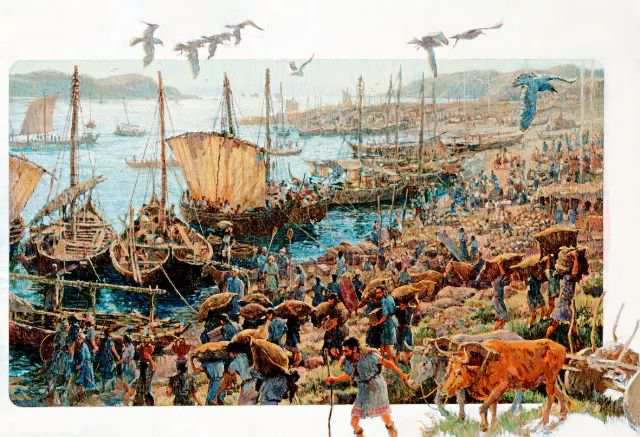
Yet China’s historical logic and the historical logic of Western hegemony are fundamentally different. The modern Western world system grew out of Mediterranean civilization. The Mediterranean was characterized by a fragmented structure in which multiple civilizations competed with one another. In this process, when one civilization became powerful, it conquered others. This is what we call hegemony. But hegemony operates in cycles: no hegemon can rule others forever. When another power rises, the old hegemon declines, and historically, many have disappeared altogether, vanishing into the mists of time. This is a different logic from ours, which is why I call it the logic of “Rise and Fall.”
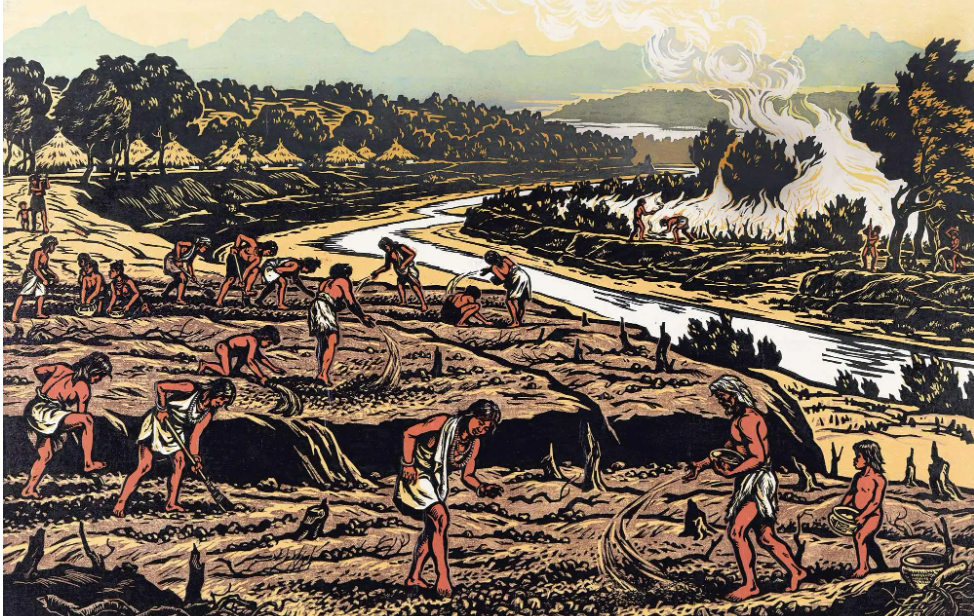
Chinese history follows a different logic, which we call the logic of “Governance and Chaos” (Zhi-Luan). Because China historically developed as a relatively self-contained continental civilization, our greatest challenge has not always been an external enemy, but the problem of our own development and order. For thousands of years, the central challenge facing the Chinese nation has been how to transcend itself, sustain innovation, and preserve a spirit of reform. Chinese history, therefore, follows the logic of Governance and Chaos. Now, with China’s comprehensive rise, we must return to our own logic. China’s destiny is determined by itself; the outside world constitutes the environment and conditions. Therefore, I do not regard anyone as an enemy.
It becomes clear, then, that these two historical logics—the Western logic of “Rise and Fall” and the Chinese logic of “Governance and Chaos”—are fundamentally different. Under China’s logic, the “Empowerment Paradox” is not a major problem. If we truly became powerful while reducing others to our vassals, we ourselves would soon stagnate, “lie flat,” or even decay.
We therefore need to empower others. With such powerful industrial and technological capabilities, we must lead everyone toward common development and build complementary relationships with other countries. Such complementarity can continually drive internal transformation and sustain our capacity for self-renewal. In this way, the Chinese nation, as an organism and civilization full of vitality, can remain healthy and dynamic over the long term.
What other challenges or doubts might the construction of an “Empowering Great Power” face? A fundamental principle underlying this model is non-interference in the internal affairs of other countries. Many people will ask: What if some countries defect, or “jump ship,” after reaping the benefits? Or, since many countries have competitive multiparty electoral systems, what if they agree to cooperate today but refuse to honor their commitments tomorrow after a change of government? I believe we do need to pay attention to these issues.
Chinese history contains a long-standing debate over whether foreign policy should be driven primarily by morality and justice or by realist interests. In fact, a dynamic balance must be found between the two: we must uphold principles, but we must also have concrete levers. So how should the construction of an “Empowering Great Power” proceed today?
First, in building an “Empowering Great Power,” we must make full use of the rules, institutions, mechanisms, and laws established within the emerging international system and international order to create reward-and-punishment mechanisms and a cooperative “ratchet effect.” Countries that participate in such cooperative projects should not be able to defect without bearing costs; a comprehensive set of international institutions can help constrain such behavior.
Second, today’s world remains dominated by Western “liberalism.” In the future, we need to develop our own values into universal values with global influence. Once such universal values are established, they will also shape the ways in which many countries think and behave.
The emergence of the concept of the “Empowering Great Power” is not a historical accident. It is, in this view, an inevitable requirement of the development of world history, as well as of the developmental logic of Chinese civilization. In an era marked by the decline of traditional hegemonies, intensifying global challenges, and the rise of emerging powers, the world urgently needs a new model of major-power leadership that transcends traditional hegemonic logic. China’s positioning as an “Empowering Great Power” is presented as a response to the demands of this era. An “Empowering Great Power” that does not seek hegemony but advocates inclusive cooperation and development is becoming an important force in the transformation of the world order.
This is China’s commitment to the world, and it is also China’s contribution to human civilization.
Editor: Zhao Yiwen