

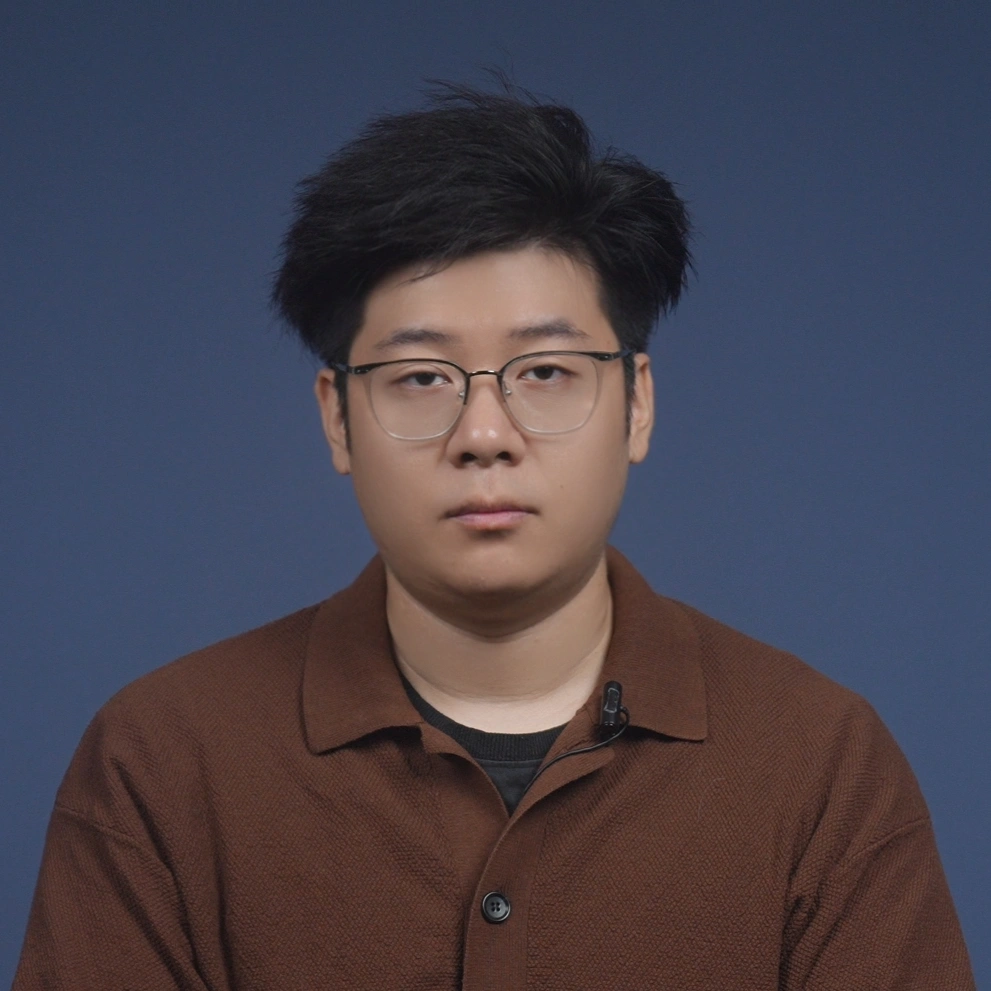
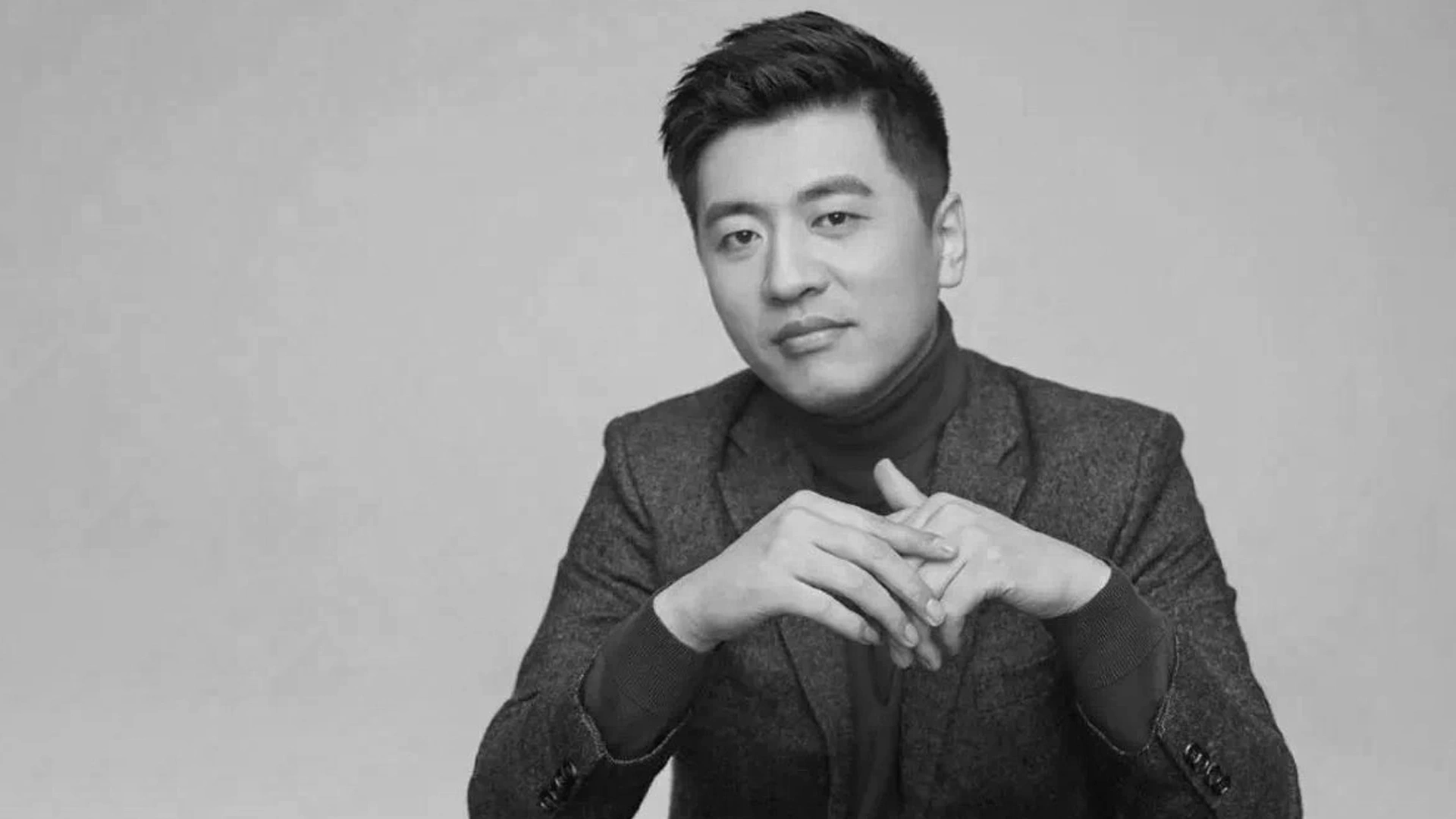
In March 2026, China’s most important state newspaper published an obituary for Zhang Xuefeng, a self-made education consultant with sixty million followers, no formal credentials, and, as of four months earlier, an active punishment from China’s internet regulator. Then he died. And the same system that had disciplined him put his name on the front page.
So why was he criticized while alive but mourned after death? To understand that, you need to know who he was and what kind of trouble he caused. And eventually, this shift will tell us something about how decisions actually get made inside the Chinese government.
I. The Poor Kid from “Prosperity County”
Zhang Xuefeng was born into poverty in a rural county in China’s northeast. His father was a railway worker. His mother was a street vendor. In China, there is a deeply held belief that education is the only way out for families like his, and the vehicle for that belief is the gaokao, China’s national college entrance exam. Think of it like the SAT, but far more consequential: one test, taken over two or three days, and your score alone determines which university you get into. No recommendation letters, no family donations, no legacy admissions. For millions of kids from poor families, it is the only shot at a better life.
Zhang Xuefeng scored well, ranking 60th out of all exam takers in his county, and got into a solid, nationally recognized university. But China’s higher education system doesn’t just test you; it sorts you. Students don’t simply choose a major, they are allocated one. If your score isn’t high enough for your top picks, the university assigns you to whatever program has spots left. Zhang Xuefeng was assigned to a major he had never heard of: Water Supply and Drainage Engineering. He didn’t choose it. He didn’t understand it. He had no interest in it.
And the mismatch broke him. He failed dozens of course credits, graduated without an actual degree, and ended up in Beijing making roughly 350 dollars a month with no benefits.
But it was precisely this failure, the experience of fighting his way through one of the most competitive exam systems on earth, only to be sorted into irrelevance, that gave him his life’s mission. Years later, when he started making videos, he told families the things no one in the system would tell them: which majors actually led to jobs, which schools had big names but terrible employment rates, and which fields to avoid if you couldn’t afford to gamble. A single lecture video made him an overnight sensation. His following exploded to sixty million, making him the biggest name in Chinese education.
His entire philosophy boiled down to one sentence: “For ordinary people, the only purpose of education is employment.”
He wasn’t some detached expert handing down advice from an ivory tower. He was the most vivid, living example of what happens when the system fails you. And once he voiced that concern, bluntly, relentlessly, night after night, it echoed with hundreds of millions of viewers, especially parents in small towns who couldn’t tell the difference between a university and a vocational college, and kids who were the first in their families to test into college.
But this “good deed” soon got him in trouble.
II. The “Wrong” Hard Truths
The moment Zhang Xuefeng moved from generic career advice to telling people which specific majors to avoid, he crossed a line.
In 2023, during a livestream, a parent asked about their kid wanting to major in journalism. Zhang Xuefeng said, and I’m paraphrasing only slightly, “If your kid insists on studying journalism, I would knock him out and sign him up for something else.” This set off a firestorm. People’s Daily and several university professors pushed back publicly, saying he was trashing the entire field of social sciences and creating a ranking system where some majors are “worthy” and others are “garbage.”
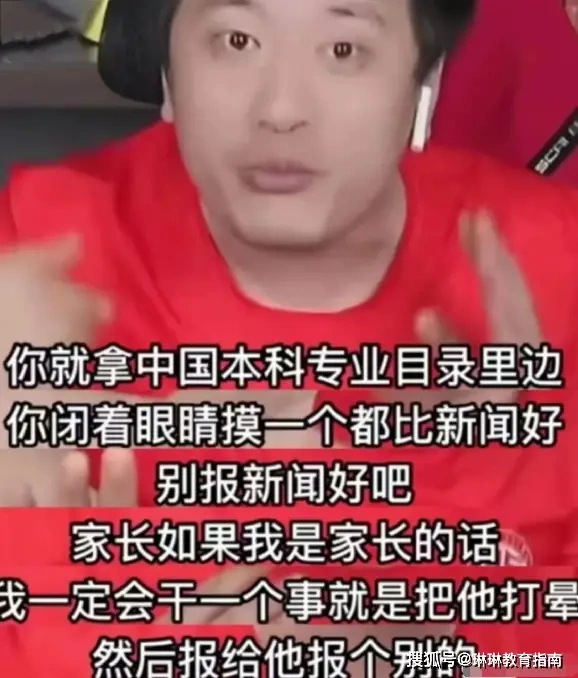
Then in September 2025, Zhang Xuefeng doubled down. He said that “all liberal arts are basically service industries” and told ordinary families to think twice before picking any arts-related major. A major state media outlet published a critique calling his approach dangerously utilitarian, arguing that dismissing foundational fields would undermine the country’s ability to innovate. That same month, his accounts were blocked from gaining new followers. A few months later, he received a streaming suspension from China’s internet regulator.
Across these clashes, there was a consistent logic on the government’s side. China’s official line on education goes something like this: “Every major has value. Education serves the national strategy. Follow your passion and serve your country.” Zhang Xuefeng’s entire career was a direct challenge to that narrative. He told millions of families, with zero filter: if you’re a kid from a poor family, the first thing you need to figure out is how to put food on the table.
Every single day in his livestream room, he did one thing: he told sixty million kids from poor families, in the bluntest way possible, which majors had the most government job openings, which ones made it easiest to get hired at big tech companies, and which schools had big names but terrible employment rates.
This made parts of China’s education establishment deeply uncomfortable. Because every hard truth he spoke pointed to exactly where the official system had fallen short. The Ministry of Education would never publish a “majors to avoid” list. Every university’s admissions brochure would always paint every single program as having a brilliant future. In this world of systematic information distortion, Zhang Xuefeng’s blunt talk became something rare and precious.
One user on Zhihu, China’s equivalent of Quora, wrote: “Zhang Xuefeng is the first person I’ve ever seen who made a living by telling the truth.” Another comment was even sharper: “When a society needs an internet celebrity to do the career planning that schools should be doing, it’s not the internet celebrity who needs to reflect. It’s the entire system.”
Zhang Xuefeng was no educator in the traditional sense. He simply took big, structural problems in Chinese society and translated them into practical, individual survival strategies. He helped kids from poor families make it to shore.
And maybe even he never imagined that this deeply practical work of ferrying people across the river would eventually change the course of the river itself.
III. Not a Monolith
In March 2026, Zhang Xuefeng’s name appeared in People’s Daily for the last time. Multiple official media outlets reposted the obituary issued by his company. The language contained no criticism at all. Instead, it described him as someone who “came from humble origins and devoted his life to students.”
Western media’s narrative is simple: dead men don’t cause trouble. A posthumous endorsement costs the system nothing, you get the goodwill of honoring a popular figure without the risk of him saying something embarrassing tomorrow.
Many argue that’s probably part of the truth. However, if you look at what was quietly happening inside Chinese universities while Zhang Xuefeng was being criticized, a more interesting picture emerges, one that challenges the common assumption that the Chinese government speaks with a single voice.
Here’s the key thing most outside observers miss about China’s one-party system: it is not a monolith. The people who criticized Zhang Xuefeng and the people who ultimately honored him were, in all likelihood, not the same people.
Think about who had the most to lose from his message. When Zhang Xuefeng said journalism was useless in 2023, the loudest pushback didn’t come from some abstract “Chinese government.” It came from journalism professors, deans of humanities departments, and commentators whose careers were built on the premise that these fields mattered. They had an existential stake in the argument. Their enrollments, their funding, their institutional relevance, all of it depended on the idea that every discipline has equal value.
Meanwhile, inside the Ministry of Education, a completely different group of officials was staring at a different set of numbers: millions of graduates unable to find work, and an industrial policy that desperately needed more engineers, AI specialists, and applied scientists. These people didn’t necessarily disagree with Zhang Xuefeng. They just couldn’t say so publicly while the humanities establishment was still fighting back.
And here’s the striking proof. Just two weeks before Zhang Xuefeng died, remember, he’s the guy who said “journalism is useless”, at China’s biggest annual political gathering, the National Two Sessions, the head of Communication University of China, the country’s most prestigious media school, publicly announced that the school had cut 16 undergraduate programs in one sweep. Gone were things like Translation, Photography, and Comics. The reason? The future belongs to “human-machine collaboration,” and the curriculum needs a complete overhaul.
At the same time, new majors were popping up everywhere, programs with words like “intelligent” and “digital” in their names. Artificial intelligence, smart construction, digital economy, big data management. The Ministry of Education had explicitly told universities that new programs should focus on science, engineering, agriculture, and medicine, and that humanities, social sciences, and arts programs should be scaled back.
When Zhang Xuefeng said in 2023, “You could pick any major at random with your eyes closed and it’d be better than journalism,” scholars called him a utilitarian. They accused him of creating a hierarchy of disciplines. But three years later, even Communication University of China itself started cutting programs that were out of touch with the job market. The Ministry of Education set a goal of restructuring 20% of all majors by 2025.
So here’s what actually happened: the balance of power inside the system shifted. As youth unemployment worsened and the demand for tech talent intensified, the officials pushing for practical reform gained the upper hand over those defending the traditional disciplinary structure. People’s Daily’s obituary wasn’t an act of self-correction by a unified government. It was a signal that the reformers had won this particular internal battle, and that Zhang Xuefeng, for all his rough edges, had been fighting on the side that ultimately prevailed.
This pattern isn’t new in China. When Deng Xiaoping restored the gaokao in 1977 after the Cultural Revolution, the popular narrative is that he simply made a wise decision. But inside the system, it was a bitter fight. The faction that benefited from the old recommendation-based admissions system, where workers and peasants were hand-picked for university based on political loyalty, resisted fiercely, because that system sustained their institutional power. On the other side, scientists and university administrators were desperate for students who could actually do the work. Deng didn’t just “decide” to bring back the exam. He needed trained engineers, researchers, and technicians to deliver on his “Four Modernizations”, the sweeping plan to modernize China’s agriculture, industry, defense, and science, so he sided with them. The gaokao was restored not because one man saw the light, but because a leader’s strategic agenda aligned with one side of an internal struggle, and that alignment determined the outcome.
Zhang Xuefeng, of course, was no Deng Xiaoping. But the underlying dynamic was structurally similar: a debate about education that looked from the outside like a single government changing its mind, but was actually a contest between competing interests inside the system, with the outcome determined not by who was “right,” but by which faction’s agenda aligned more closely with the pressures of the moment.
This matters for understanding China.
IV. Win Education Equity, Win China
But why does education, of all issues, generate this level of intensity inside the Chinese system? To understand that, you have to understand what education means in China, and how fundamentally it differs from the role education plays in the United States. In the U.S., education inequality is a source of deep anxiety, the student debt crisis, the battles over affirmative action and legacy admissions. A kid from a poor family who doesn’t make it to college is a policy failure. It may provoke outrage, reform efforts, even protest. But it doesn’t threaten the legitimacy of the political system itself.
In China, it does.
There is a historical example that makes this viscerally clear. In 1397, during the reign of Zhu Yuanzhang, the founding emperor of the Ming Dynasty, a scandal erupted around the imperial examination. The exam was the ancient precursor to the gaokao: for over a thousand years, it was how China selected government officials. Any man, no matter how poor, could in theory study the classics, pass the test, and become a high official. That year, all 52 successful candidates came from the south. Not a single northerner made the list. Northern scholars accused the examiners of fraud. A review concluded the results had been fair, the southerners were simply better prepared. But the northern scholars refused to accept it.
Zhu Yuanzhang’s response was ruthless, and by modern standards, indefensible. He had the chief examiner and the top-ranked scholar executed, threw out the entire results list, and personally re-administered the exam to admit northerners. There was no actual cheating. But Zhu understood something that every Chinese ruler since has understood: when ordinary people stop believing that the path upward is open to them, they don’t file lawsuits. They revolt.
The upward mobility that education provides to common people, this has been the most basic social contract between China’s rulers and its people for over a thousand years, regardless of dynasty or ideology. The gaokao is the contemporary expression of that contract. Every year, more than ten million students walk into the same testing rooms and have their futures determined by the same score cutoffs. No recommendation letters. No family donations. No legacy admissions. The perceived fairness of this system remains one of the key pillars holding up the Communist Party’s legitimacy.
And this is exactly why Zhang Xuefeng’s story mattered beyond the world of education consulting. What he exposed was a specific kind of unfairness that the system had been quietly tolerating: not corruption in the exam itself, but an information asymmetry.
Zhang Xuefeng didn’t fix this problem. But he made it impossible to ignore. Sixty million followers watching him say, night after night, “don’t pick this major if you’re poor”, that was a direct challenge to the system’s claim that it provided fair access to opportunity. And in a country where that claim is foundational, the challenge could not be left unanswered indefinitely.
V. A Critic Worth Remembering
Let’s be honest about what happened here. While Zhang Xuefeng was alive, the system punished him. So, this is neither a heartwarming story of a system that listens to its critics, nor a simple tale of suppression. It’s something more complicated and, in its own way, more interesting: Someone on the outside says the thing that people on the inside are thinking but cannot say. And when the moment is right, the system absorbs the critic’s message, sometimes only after the critic is gone.
But understanding this process also reveals what the real fight was actually about. It was never really about whether liberal arts majors are useless. It was never about whether an internet celebrity should have the right to tell people what to study. The fundamental question, the one that every faction inside the system was ultimately trying to answer, was this: What kind of education best serves China’s development and its people?
The humanities professors said: an education that cultivates well-rounded citizens and preserves intellectual diversity. The reform officials said: an education that produces employable graduates and feeds the industries the country needs to compete. Zhang Xuefeng said, in his own unvarnished way: an education that gives poor kids a real shot at a real life.
Zhang Xuefeng was never standing on the opposite side of the Chinese government. He was standing on the side of a question the government itself was still trying to settle. It just took until after his death for the system to recognize that he had gotten to the answer earlier than most, and had been saying it louder, and more clearly, than anyone inside the walls ever could.
A critic this sincere is, for China, far more worthy of remembrance than any eulogist.
Editor: Charriot Zhai