

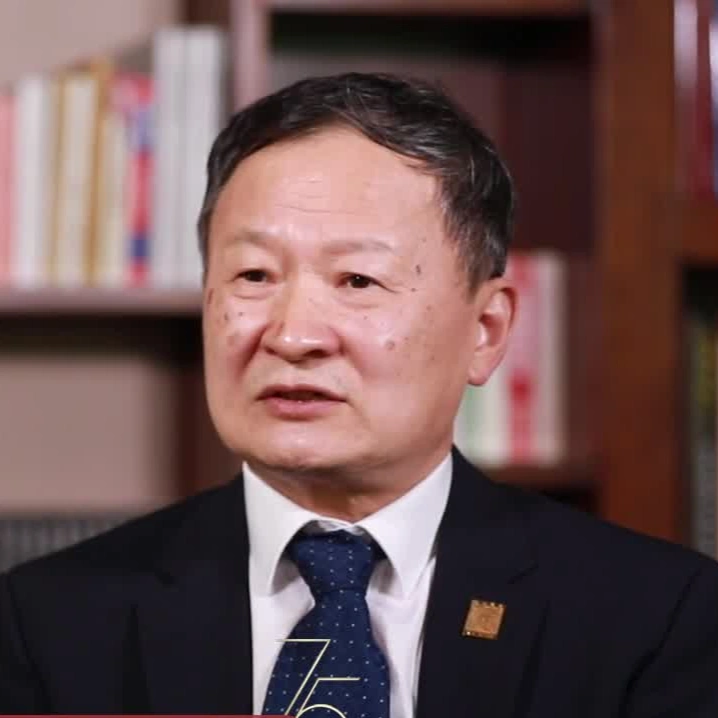


After Japanese Prime Minister Sanae Takaichi asserted that “a Taiwan contingency is a contingency for Japan,” her remarks drew widespread condemnation from China and the international community. However, Professor Wang, a retired PLA Senior Colonel and prominent Chinese strategic scholar, argued that Takaichi’s position on the Taiwan Question extends far beyond mere “misstatements.” It reflects a calculated pattern of erroneous words and actions that could plunge Japan into catastrophe.
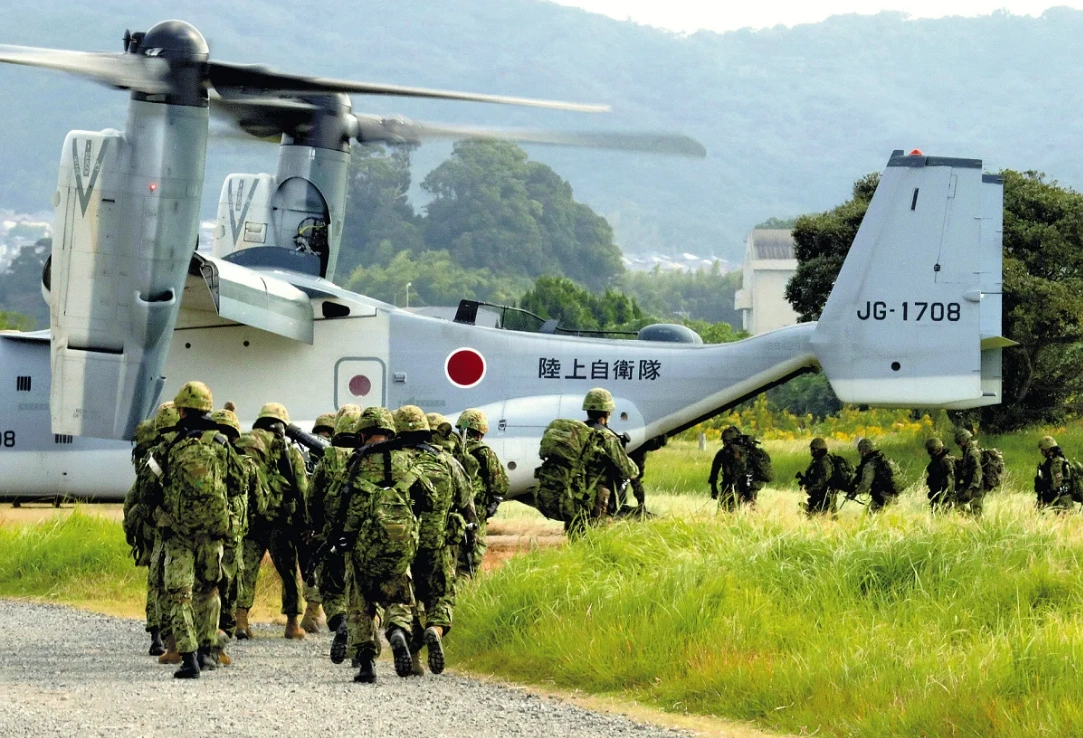
According to reports from Japanese outlets including Nikkei and Yomiuri Shimbun, on October 27, just one week after Takaichi became Prime Minister, the Japan Self-Defense Forces carried out a large-scale air-sea “island seizure” exercise in the Southwest Islands, involving as many as 52,000 personnel. This demonstrates that Japan’s threat of force against China extends far beyond irresponsible rhetoric; Tokyo is showing real military agitation. Such actions should never be dismissed as “misstatements”—they are dangerous moves warranting global attention.
Yet, Professor Wang also points out that the Takaichi administration’s appetite for military adventurism is built on two major misjudgments. These reveal not only a lack of basic military understanding, but also a fundamental misperception of Japan’s own position within the U.S.–Japan alliance.
Misjudgment #1: Overestimating its ability to challenge the PLA
According to the Tokyo Shimbun, the JSDF had already drawn up three contingency plans for island seizures in the event of a Taiwan crisis as early as 2021:
1. Launch a rapid amphibious assault using approximately 3,000 personnel from the Amphibious Rapid Deployment Brigade (ARDB), supported by transport vessels, helicopter carriers, and light carriers.
2. Conduct a large-scale amphibious operation, deploying follow-on forces to the southwest with sustained transport and logistics support.
3. Employ missile strikes and maritime blockades—primarily using the extended-range Type 12 anti-ship cruise missile—to shield amphibious operations.
China’s state media CCTV bluntly assessed: none of these plans would succeed.
A basic military principle holds that amphibious operations require air superiority. Attempting a landing without it is essentially walking into certain death. Yet Japan’s Air Self-Defense Force stands no chance against the PLA Air Force.
Japan has only about 40 operational F-35s. Conservative estimates from The National Interest suggest China’s J-20 fleet exceeded 200 by 2024. As a single-engine multirole stealth fighter, the F-35 is inherently disadvantaged in range, radar aperture, and payload compared to the twin-engine J-20, let alone Japan is also massively outnumbered. The ASDF would struggle just to defend itself, let alone cover an amphibious operation.
Japan’s long-standing security alliance with the United States may have encouraged Tokyo to assume it could rely on U.S. air-superiority coverage while integrating its own fighters into the broader data-link network. However, when Washington provided the F-15J, it withheld a critical component for beyond-visual-range combat: the U.S.-standard Tactical Electronic Warfare System—including the AN/ALQ-135 internal ECM suite as well as the AN/ALR-56C and AN/ALR-128 elements of the American TEWS architecture.
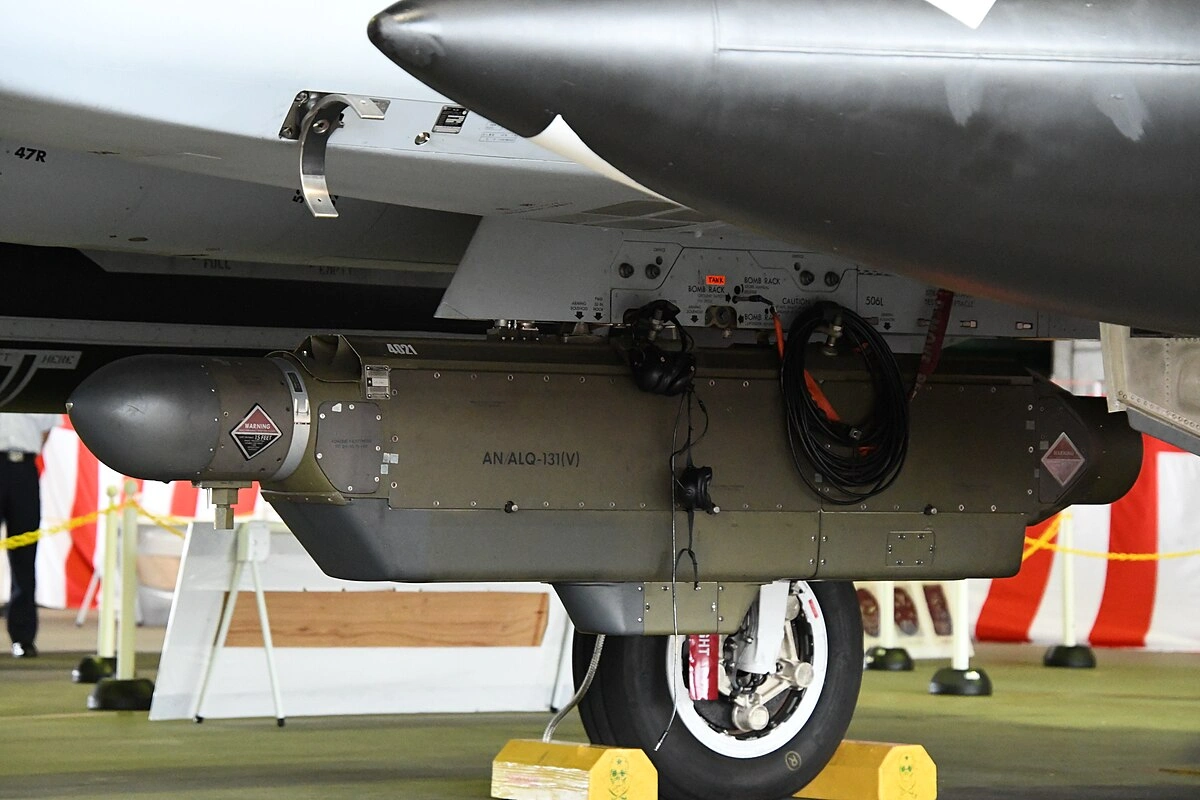
This radar warning receiver alerts pilots to missile locks and targeting while providing limited electronic countermeasures. The risks of operating without such capabilities against the PLA’s modern air power have been demonstrated in recent conflicts—most notably through the performance of India’s Rafales.
Although Japan has developed an external electronic warfare (EW) pod, it occupies weapon stations on the F-15J, increases aerodynamic drag and fuel consumption, reduces combat radius, and simultaneously enlarges the aircraft’s radar cross-section—making it an even more vulnerable target within China’s integrated kill chain, which leverages early-warning aircraft, stealth fighters, and stealth loyal-wingman UAVs.
Moreover, any Japanese amphibious forces attempting to assemble or maneuver would be exposed to China’s rocket artillery, cruise missiles, and hypersonic weapons—potentially in saturation strikes.
Historical precedent illustrates the consequences: On August 19, 1942, Allied forces attempted to land at Dieppe without air superiority. Of the 6,086 troops, 3,623 were killed, wounded, or captured. The eastern landing force lost around 500 in just two minutes, and the entire operation failed in six hours. That disaster was caused merely by WWII-era bombs, artillery, and machine guns. What would happen under today’s precision-guided weapons and drone-directed fires? Takaichi should confront this reality.
Misjudgment #2: Trying to rope America into fighting its battles.
Weak but belligerent, Japan’s right wing clings to the U.S.-Japan Security Treaty, hoping to drag America into its fights—a self-deluding fantasy that betrays a complete misunderstanding of the underlying dynamics of great-power competition.
First, the U.S. has always regarded Japan as a subordinate force—a convenient frontline asset. The logic is simple: If the U.S. initiates a conflict with China, Japan must share the costs. However, if Japan provokes China and tries to pull the U.S. in, Washington has no obligation to bail out Tokyo’s reckless adventurism.
A clear warning has already appeared: after Takaichi’s provocative statements, the U.S. promptly withdrew its Typhon mid-range missile system from Japan. This move was a clear signal: Washington drawing a line.
Furthermore, during a phone call on November 24 with President Xi, Trump explicitly said that the U.S. “understands the importance of the Taiwan issue to China.”
Both U.S. leadership statements and military actions reflect the same reality: Takaichi’s misguided remarks and actions on the Taiwan question, is not welcomed by the White House.
Professor Wang notes that the root cause is a structural shift in the geopolitical logic underpinning the U.S.–Japan alliance.
Japan’s past strategic value to the U.S. lay in its role as a key node in the “First Island Chain.” Within a WWII-era naval deployment framework, it served as a secure logistical hub beyond China’s strike range. However, since the Cold War, the proliferation of nuclear-powered vessels has drastically reduced reliance on fixed fuel supply bases. Meanwhile, China’s monumental progress in missile technology has placed the entire First Island Chain, even Guam, within its Anti-Access/Area Denial(A2/AD) Zone.
To court a head-on clash with the PLA inside China’s defensive perimeter isn’t just risky—it’s strategically catastrophic. CSIS’s 2023 war game reveals why: “In three weeks, the United States will suffer about half as many casualties as it did in 20 years of war in Iraq and Afghanistan,” As the report warns with chilling understatement: “Such losses would damage the U.S. global position for many years.”
This is precisely why “pulling back from the first island chain” has long been a realistic option on the table for U.S. decision-makers. Air & Space Forces Magazine reported that since 2023, the U.S. Air Force has practiced dispersed deployment across the Indo-Pacific due to pessimism about the survivability of bases like Okinawa and even Guam in wartime.
Thus, Takaichi’s remarks are not only militarily unfeasible—they actively complicate U.S. strategy. In trying to present herself as loyal to Washington by playing the Taiwan card, she is in fact challenging Washington’s strategic framework and attempting to entrap America into serving Japan’s agenda. Such overreach will only end up diminishing Japan’s value to the United States.
Irreversible Consequences: China Has Begun Reassessing Its Strategy Toward Japan
Sanae Takaichi’s provocative words and actions cannot be undone by any personal apology. China has sent an unequivocal message through its multi-pronged response: it is now fundamentally re-evaluating and redefining its relationship with Japan.
Diplomatically, the term “fengshi” (奉示) has appeared for the first time in China’s warnings, indicating that the protest now reflects the stance of the highest level of Chinese leadership—elevating the issue from departmental concern to one of national strategic will. Economically, militarily, and through media channels, a coordinated multi-agency response demonstrates that China views this as a comprehensive contest warranting nationwide mobilization.
Critically, as a sitting cabinet minister, Takaichi has openly asserted the erroneous claim that “a Taiwan contingency is a Japanese contingency,” framing it as Japan’s “consistent position.” This must be seen in light of the post-WWII peace commitments between China and Japan, including the four foundational political documents—starting with the China-Japan Joint Statement—that explicitly recognize the One-China principle as the cornerstone of bilateral relations. Even a far-right figure like former Prime Minister Shinzo Abe only made such provocative remarks after leaving office and in his personal capacity, never daring to challenge this foundation as Japan’s top leader.
Now, Takaichi has not only crossed that line but also denied historical truths, issuing military threats against China. This has compelled Beijing to invoke a long-dormant yet legally potent red line in the United Nations Charter—the “Enemy State Clauses.”
These clauses authorize UN Security Council permanent members to take direct punitive measures should any World War II Axis power show signs of renewed aggression.
As victors of WWII and architects of the current international order, China, the U.S., and Russia are its guardians. By threatening China with force, Japan’s right-wing forces are challenging not only China but also all nations that cherish peace and uphold the outcomes of the anti-fascist war.
Thus, as Japan once again bares its fangs toward China, the very foundation of postwar stability is shaking. China is now compelled to ask in earnest: Is Japan—a nation that its top leader shows no remorse for its history of aggression—still a neighbor capable of turning toward peace, or must it once again be defined as an “enemy state”?
This crisis—sparked by Takaichi Sanae—exposes once again the strategic shortsightedness of Japan’s right wing. Their ingrained tendency to “respect power but not virtue” has blinded them to the most fundamental realities of geopolitics.
China’s warnings are anything but empty rhetoric. A Japan attempting to revive militarism poses a threat not only to regional stability but to the entire world. As nations within the East Asian cultural sphere, both China and Japan should well understand the principle: “Benevolence is the way of a great power; wisdom, that of a small state.” Should Japan collectively abandon this wisdom, the cost of relearning it may prove extremely costly.
Editor: Charriot Zhai
https://military.cnr.cn/gj/20251124/t20251124_527439524.shtml
https://www.nikkei.com/article/DGXZQOUA0510E0V01C25A1000000/
https://www.yomiuri.co.jp/local/kyushu/news/20251106-OYS1T50007/
https://www.asahi.com/articles/ASTCK3QG9TCKTZNB006M.html
https://www.csis.org/analysis/first-battle-next-war-wargaming-chinese-invasion-taiwan
http://www.news.cn/politics/leaders/20251124/9c9191096e0547a9a3f26e903fc6995e/c.html
https://www.airandspaceforces.com/dispersed-but-resilient-air-force-new-basing-strategy-ace/
http://www.china.com.cn/opinion/2025-11/17/content_118182593.html