


The China Academy:
There have been numerous provocative acts and statements from both Taiwan and Japan in the past few days. Why would Japan feel they are in the right place to get involved in this issue at this particular time?
Shen:
No one understands the reason for her action. She might just want to do it.
From China’s side, we believe that maybe she wants to send a testing balloon. Such a testing balloon is very important to her. Maybe she can shoot, she can kick maybe two or three birds with this one stone.
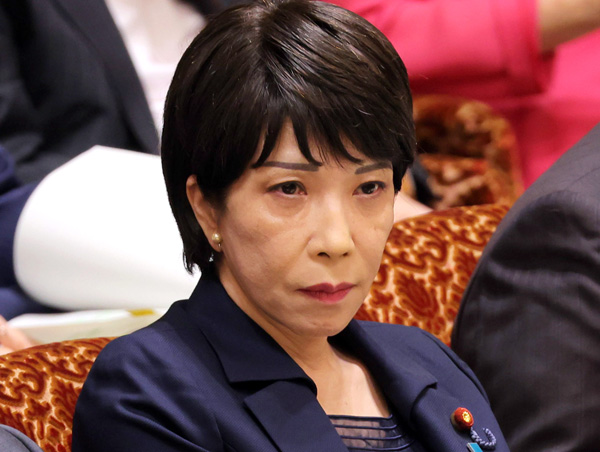 Japan’s right-wing Prime Minister Sanae Takaichi
The first thought is just attention-seeking. I think she first wants to transfer attention from her poor domestic governance to a more highly symbolic security issue, because nowadays the Japanese economy is not that good and Japanese people’s life burden is rising very high.
This new prime minister can do nothing to relieve the painful life and underlying cost of Japanese people. She wants to transfer the attention from the critical side to a more simple and highly symbolic issue, which she can deal with only by using very articulate terms.
And I think that is one of the critical goals that the so-called right-wing political groups inside Japan want to realize during her administration, which means they want to push forward some important modifications of the Peace Constitution, especially Article Nine.
They want to provide a basis for talking about the kind of scenarios that “it is a proper time for Japan to survive,” just like those war criminals did in the 1930s—to tell people that it is the appropriate time to attack Pearl Harbor; otherwise the Japanese Empire would be defeated by those enemies, and so on. The same logic they used in the last 80–100 years.
The third is that she wants to send some signals to test China and the United States’ baseline especially. Just like this young prime minister, she believes that because she is so cute in front of President Trump—if you read her moves and body language during that process, definitely she feels very happy.
Okay, she believes that she is so cute, and maybe she believes that she got some assurance from President Trump. And Trump will provide some protections—a kind of blank check without any preconditions. So she can do everything.
It is very Japanese style to deal with such kind of conditions. They launch a provocative action first and wait and see your reaction. If you are tough, he just moves one step back, two steps back, and then stays here and waits for the next time. And then after several times, when you nearly forget what happened, these guys will move again.
The China Academy:
What is China going to do about it?
Shen:
I think that this time Japan needs to take China’s diplomatic retaliation rhetoric very seriously, because for the first time our Vice Minister of Foreign Affairs called the Japanese ambassador in China with directions from the top leaders. It is the first time we have read these terms “奉示召见”. It is the first time we have seen these terms in our formal news reports, and several diplomats made a very clear explanation.
“奉示召见” means I will have a paper. This paper in Chinese is called a “说帖”. It is a formal statement. I will read every term on this paper to your face. And this paper is not written by the Vice Minister. This statement represents China’s national interest. It is the formal voice from the top leaders. It is not negotiable. It is definitive.
It is that I read out this statement and read every term to your face. It is very formal, very harsh, and very rarely used, because it shows I am very angry.
And I tell you that definitely I will do something to punish you if you do not take back your rhetoric. I am sending you a very formal statement.
The China Academy:
What could be the punishment?
Shen:
Yes, first, the Chinese Foreign Ministry already issued travel warnings to Chinese tourists, saying that it is not an appropriate time to go to Japan. That means cutting off tourism. That means China wants to launch economic sanction policies toward Japan. We are moving step by step.
And also, there is news saying that nowadays three ministries have issued statements on these issues. There is the Office dealing with Taiwan Affairs in the State Council, the Ministry of Foreign Affairs, and the Ministry of Defense. That means that definitely you will see some highly symbolic military actions or even exercises alongside the Japanese islands to show that China is quite serious.
If you do not take this rhetoric back, definitely, maybe in the very, very worst scenario, this escalation can lead to real military conflict. And if you consider the military capacities between China and Japan, such a conflict, if it happens, will become a unilateral punishment taken by China toward Japan. And Chinese people do not care—it is an appropriate time to launch a kind of final count on all those historical debates between our two countries.
Editor: Zhongxiaowen