



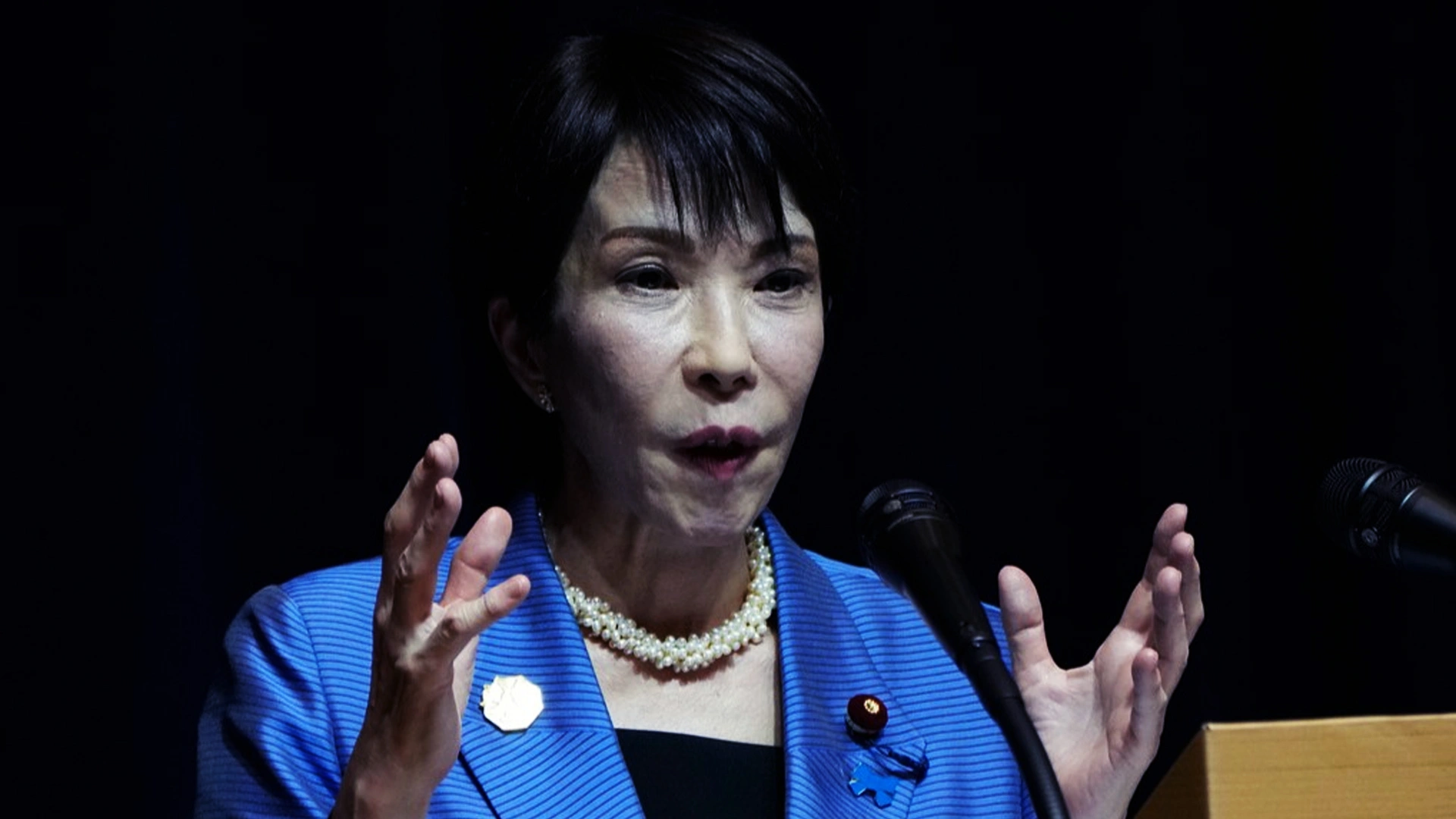
On November 15, Japanese Prime Minister Sanae Takaichi said that the Chinese mainland’s “use of force on Taiwan” could constitute a “survival-threatening situation” for Japan and implied the possibility of armed intervention in the Taiwan Strait.
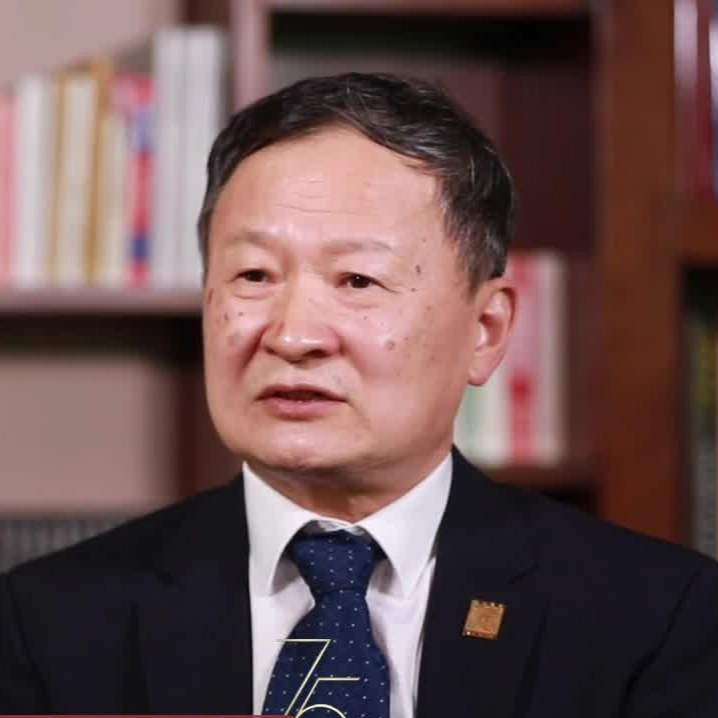
However, according to retired PLA Senior Colonel and Unrestricted Warfare author Professor Wang Xiangsui, China’s reunification is already underway. Japan not only lacks the ability to hinder it, but even struggles to fully comprehend China’s approach. A prime example is China’s establishment of “Taiwan Retrocession Day” on October 25 this year.
How does this accelerate reunification? Mainly in three ways:
1. By establishing Taiwan Retrocession Day, China is exercising de-facto governance over Taiwan Island.
The holiday commemorates the return of Taiwan to China after World War II, when defeated Japan relinquished its illegal occupation. On October 25, 1945, the surrender ceremony on Taiwan island was held at Taipei’s Zhongshan Hall. The Office of the Chief Executive of Taiwan Province subsequently designated October 25 as “Retrocession Day,” with a one-day holiday for government agencies and schools. This affirmed the long-established fact that Taiwan has been an inseparable part of China’s territory since 1945.
During Japan’s occupation, the Chinese people in Taiwan province endured great suffering. The day they were liberated from colonial rule should have been celebrated for generations. Yet in 2000, Lee Teng-hui administration’s “Regulations on Memorial Days and Holidays” abolished Taiwan Retrocession Day.
This was clearly not just the cancellation of a public holiday, it was a betrayal of history. By reinstating October 25 as Taiwan Retrocession Day, China is restoring the holiday to the people and restoring justice to history.
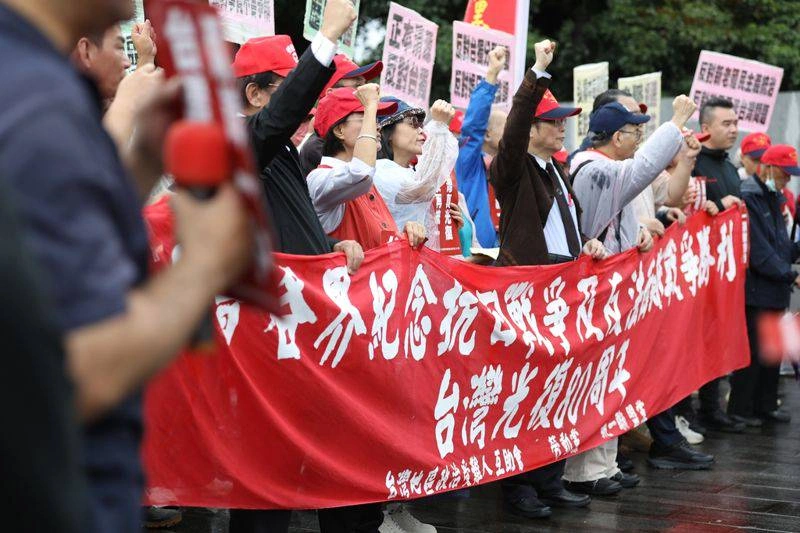
The result proved this correct: once reinstated, people across Taiwan responded enthusiastically. In Taipei, Taichung, Kaohsiung, and other places, residents spontaneously held celebrations. Nineteen organizations, including the Taiwan Unification Alliance and the Taiwan Labor Party, held joint commemorative events. The New Party also held autumn rites at the Martyrs’ Shrine and organized a “Celebrate Retrocession, Promote Reunification” motorcade.
In Pinghe County, Zhangzhou, Fujian Province—the ancestral hometown of Lai Ching-te—the Lai clan ancestral hall held a grand memorial ceremony. Lai Jintu, president of the Fujian Lai Clan Association, stated: “Lai Ching-te repeatedly promotes ‘Taiwan independence’ and claims he is not Chinese, this is the behavior of an unfilial descendant. People across the strait are family. We hope he corrects his falsely claim, adjusts his attitude, and we still welcome him to come home to honor his ancestors.”
Widespread civil participation in the Taiwan Retrocession Day abolished by the Lee Teng-hui authorities shows not only that Taiwan residents increasingly acknowledge the Mainland’s designation of this holiday, but also that public recognition of Taiwan as part of China cannot be erased by politicians like Lai Ching-te or Sanae Takaichi.
Essentially, this is a successful practical exercise of governance over Taiwan Province by the Central People’s Government of China and thus a rejection of the “Taiwan’s status undetermined” narrative.
2. International celebrations demonstrate that the world welcomes China’s reunification
On October 25, Chinese embassies in Russia, the United States, and Japan all held events commemorating the 80th anniversary of Taiwan’s retrocession. In Japan alone, more than 270 non-governmental organizations expressed support.
By contrast, despite constant vowing about “Taiwan is an independent country,” separatist forces have never dared to establish or celebrate any “Taiwan Independence Day.”
It is now abundantly clear who legitimately holds sovereignty over Taiwan, and who is isolated and has a guilty conscience.
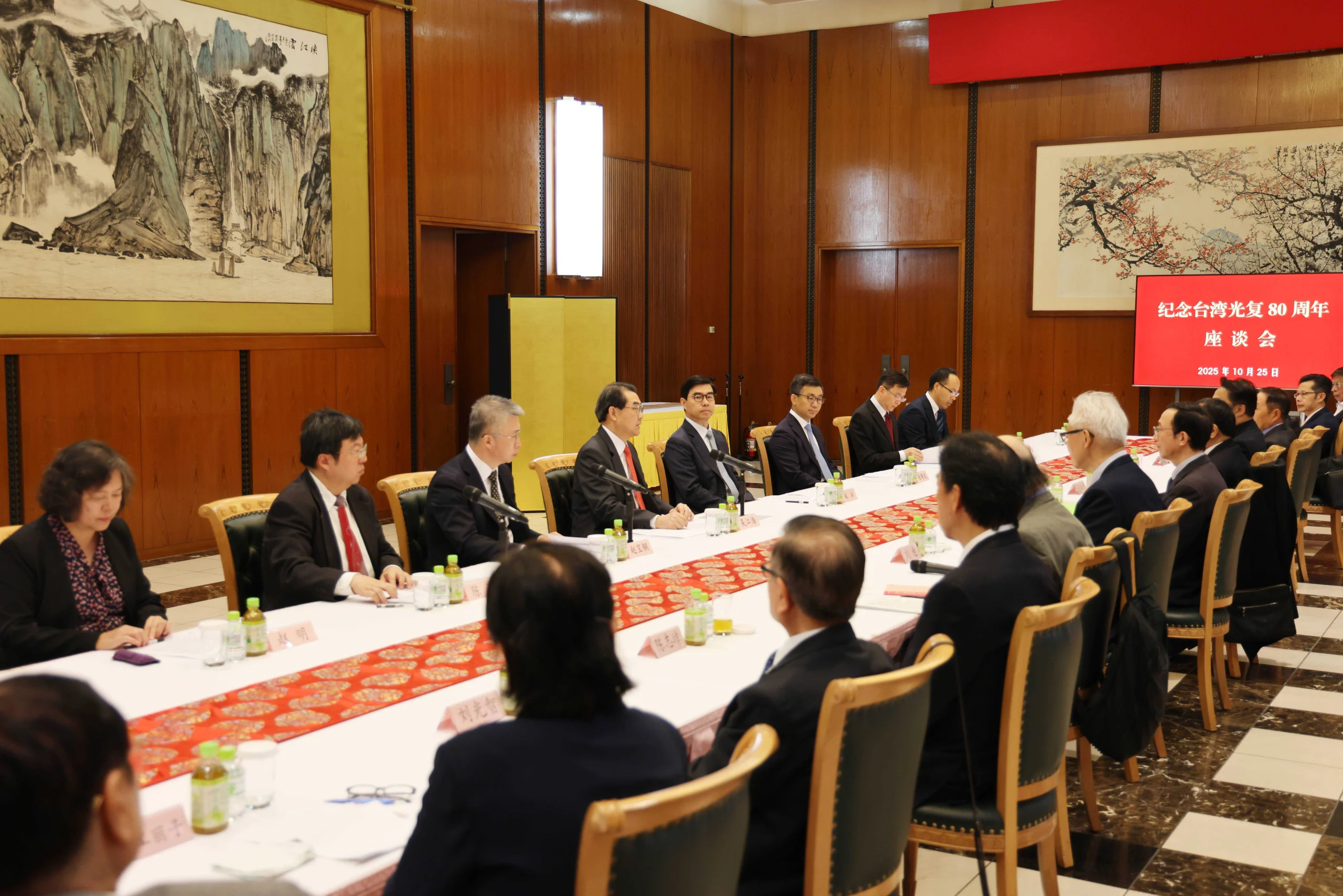 A symposium held by the Chinese Embassy in Japan marks the 80th anniversary of Taiwan’s return to the motherland, on October 25, 2025.
3. An App for “pledging allegiance” further expose the guilty conscience of separatist forces
Recently, several “Return to the Motherland”–themed apps created by Mainland netizens have gone viral in both Taiwan and the Mainland. For example, an app called “Home-Returning” includes a feature that allows users to declare allegiance with just one click. Another similar app has circulated widely among Taiwan users. These apps allow Taiwan residents to register using their ID names and even include a “call the PLA” button.

Within less than a month, such app reportedly gained more than 128,000 users. Users can earn points through registration and inviting friends, which can later be exchanged for eggs, milk, and other daily necessities, as well as game credits after reunification, an appealing feature for many young people.
The Lai administration denounced the apps as “cognitive warfare aimed at dividing Taiwan society” and warned of “privacy leaks.” But Taiwan netizens commented, “The DPP just gave these apps free prime-time advertising.” Mainland netizens laughed that “these benefits are more practical than political slogans,” calling on Taiwan authorities to acknowledge public demand for peaceful cross-strait communications.
On the other hand, China’s Taiwan Affairs Office spokesperson Zhang Han said on November 5 that these apps reflect the shared longing of compatriots on both sides for early reunification. He Yicheng, Member of the Central Advisory Committee of the Kuomintang (KMT) added that so many Taiwan users signing up reflects their frustration with the DPP’s policies of confrontation and obstruction, and shows that the people want peace, development, exchanges, and cooperation.
Professor Wang argues that this kind of creativity opens a new pathway toward reunification. Beyond traditional political, military, or diplomatic routes, many social and cultural channels can help gather consensus. During future Retrocession Day commemorations, pro-unification groups across the strait can engage on more specific issues. Each shared memory and agreement becomes another building block toward a political resolution of the Taiwan question.
In summary, whether in the Chinese Mainland, Taiwan Island, or the international community, whether among governments or the general public, Sanae Takaichi’s remarks are unwelcome and presumptuous. If she insists on challenging the will of 1.4 billion Chinese people, People’s Daily, one of China’s most prominent official media outlets, warned on November 17 that armed interference in China’s internal affairs would be extremely dangerous for Japan.
The article, “China Voice: Beware of Japan’s Dangerous Strategic Shift” noted:
“For the first time, Japanese leaders have shown a hunger for armed intervention in the Taiwan matter, and for the first time, they have issued a military threat against China. Behind this lies the dangerous attempt of right-wing forces in Japan to break free from the constraints of its Peace Constitution and pursue the status of a ‘military power.’” The article also emphasizes that despite Japan’s self-proclaimed identity as a ‘pacifist nation’ and its advocacy for a world without nuclear weapons, the Takachi administration has been ambiguous and non-committal regarding the ‘Three Non-Nuclear Principles,’ hinting at the possibility of abandoning them. Senior Japanese officials have even stated that they do not rule out the introduction of nuclear submarines.
It should be noted that following the success of its first nuclear test on October 16, 1964, the first foreign government China individually and officially notified via a diplomatic letter was Japan. Then Premier Zhou Enlai addressed the letter to Japan, sharing this significant news and elaborating in detail on China’s position regarding nuclear weapons. From that very day forward, China’s consistent and unwavering principle has been: “Not to be the first to use nuclear weapons at any time or under any circumstances, and unconditionally not to use or threaten to use nuclear weapons against non-nuclear-weapon states or nuclear-weapon-free zones.”
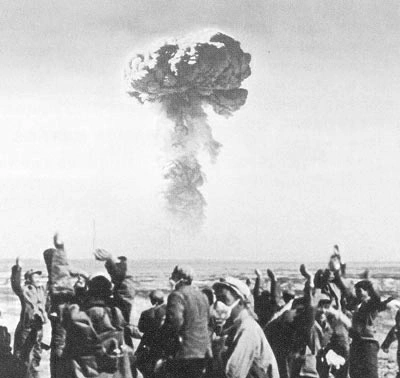
China is a responsible country and has always strictly adhered to its principles in foreign affairs. However, if Japan fails to respect the One-China principle, then an ancient Chinese admonition from two thousand years ago comes timely for Japan: “When a nation of modest scale abandons humility, when the less powerful forsake caution, when diplomatic proprieties are disregarded and great neighbors affronted, when lust for power outpaces the arts of diplomacy—therein lies the path to ruin.”
Editor: Charriot Zhai
http://eng.chinamil.com.cn/2025xb/H_251454/L_251456/16422325.html
https://www.peopleapp.com/column/30050771339-500007206123
https://jp.china-embassy.gov.cn/dszlnew/dszyhdnew/202510/t20251025_11740716.htm
https://www.mfa.gov.cn/wjdt_674879/sjxw_674887/202407/t20240722_11458030.shtml
http://www.news.cn/tw/20251025/fc5a9892359b4124b414a10755122e53/c.html
https://www.takungpao.com/news/232110/2025/1107/1138657.html
https://www.takungpao.com/news/232110/2025/1104/1137656.html