



China is about to hold the military parade marking the 80th anniversary of the War of Resistance Against Japanese Aggression and the World Anti-Fascist Victory, an event attracting global attention and high expectations. At the same time, the contest surrounding the parade on the international stage is also becoming increasingly intense.
This week, China announced the list of 26 foreign heads of state and government leaders who will attend the parade. It should be noted that this is not a complete list of all participating countries, but only covers representatives at the level of heads of state and government. Including deputy prime ministers, parliamentary speakers, other high-level representatives, international political figures, and former leaders would add countries such as South Korea, East Timor, Venezuela, Singapore, Egypt, and Bulgaria to the list, bringing the total number of participants to 32.
Looking back at 2015, 30 foreign leaders attended, including heads of state, 19 senior government representatives, and 10 heads of international organizations and institutions.
This number is an important indicator. It signifies that, 80 years after the end of World War II, the international community once again has the opportunity to examine and confirm who were the steadfast members in the fight against fascism.
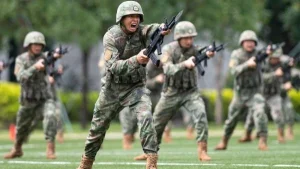
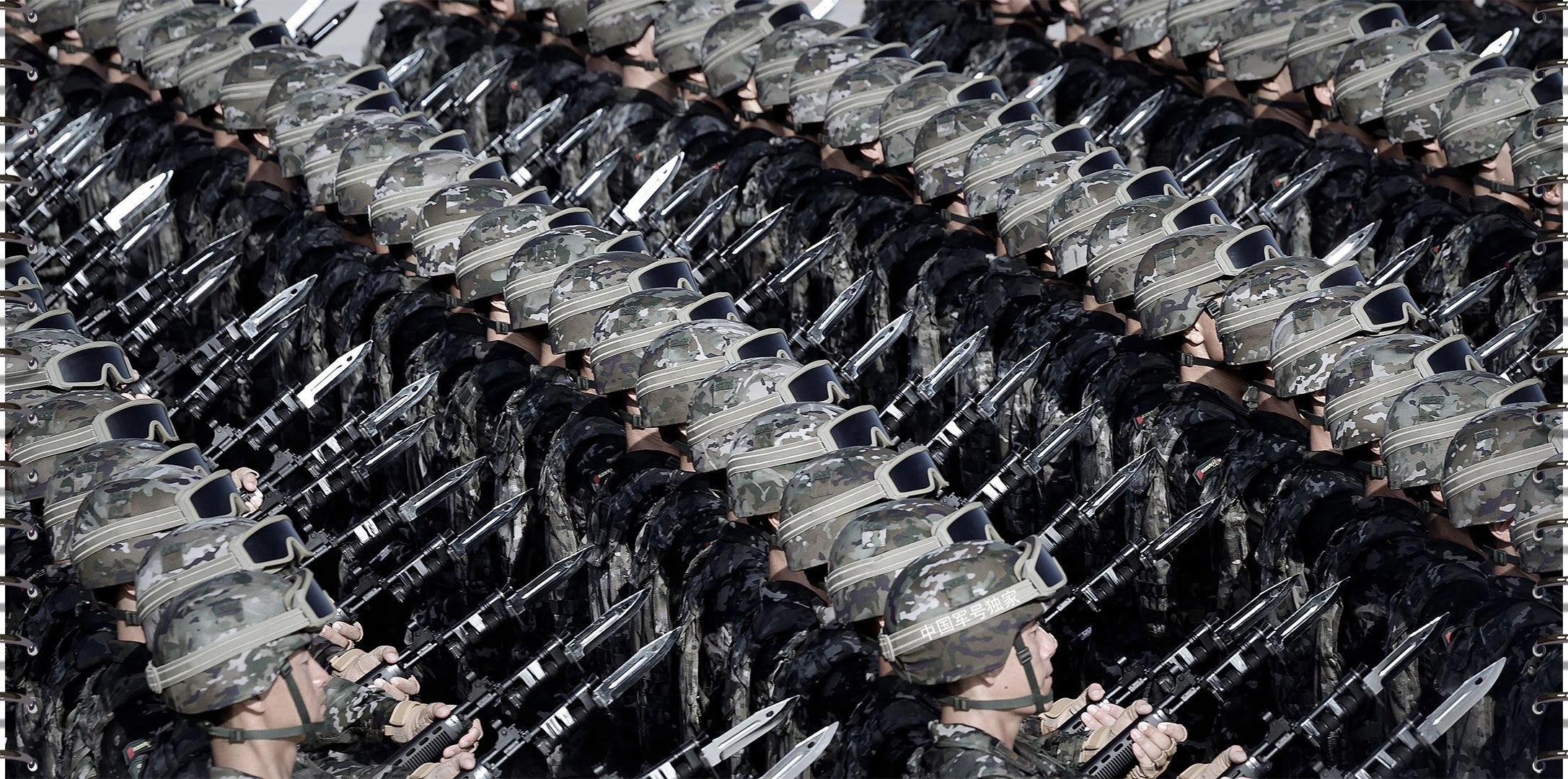 Training site for the parade
Two world wars broke out in the first half of the 20th century: the First World War was essentially a war of imperialist powers redistributing spheres of influence; the Second World War, due to the existence of Nazi Germany and Japanese militarism, carried the character of an anti-fascist war.
However, if we examine the course of World War II in detail, there are some telling elements often get overlooked on both the European and Asian fronts. For example, the sitzkrieg on the European front, the phoney war in the West, the policy of appeasement, and the Munich Agreement were all attempts by Britain and France to turn the danger toward the East, using Nazi Germany as a tool to attack the Soviet Union, thereby keeping the West in a secure position, a strategy that was in fact one of the key reasons the European war broke out.
Japan, as a small industrialized country, depended on external sources for its war materials. Where did it get, for instance, the scrap steel needed to produce shells or the oil to keep its war machinery running before it occupied Southeast Asia? To a large extent, these supplies came from the United States before the Pearl Harbor incident. Therefore, World War II actually had a very subtle dual nature: for a considerable period, the boundaries between the Axis powers and certain Allied members were not as clear-cut as they are portrayed in later narratives.
Eighty years later, It is regrettable that Western countries, to some extent, have betrayed the post–World War II order—the very fruits of victory in that war. A previous statement from the U.S. State Department spokesperson Tammy Bruce said, “Eighty years ago, the U.S. and Japan concluded a devastating war in the Pacific.” In Europe, when commemorating the Normandy landings, the history of the Eastern Front was also astonishingly rewritten. These actions remind us that attendance at the September 3rd parade effectively becomes a criterion for identifying those who truly believe in anti-fascism and in the victory of 80 years ago, and thus reflects a determination not to let history repeat itself.
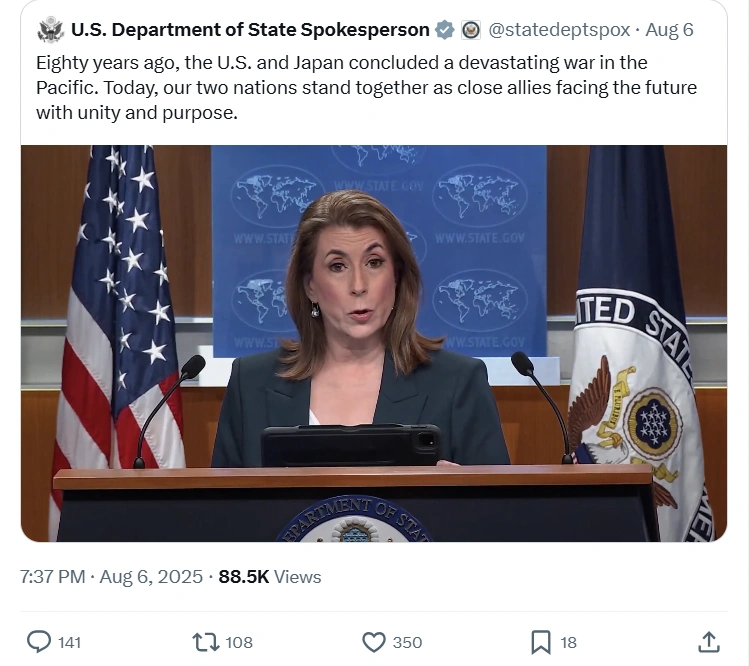
On August 6, the city of Hiroshima in Japan held a peace memorial ceremony for the 80th anniversary of the atomic bombing. The U.S. State Department’s official Twitter account posted remarks made the day before by its spokesperson, Tammy Bruce, which the U.S. Embassy in China then reposted on the Chinese social media platform Weibo—arousing great controversy.
At the same time, Japan’s Ministry of Foreign Affairs is investing huge sums to lobby countries worldwide not to attend the September 3rd parade, spreading negative evaluations and false information regarding Dead To Rights, a recently released film in China that depicts the Nanjing Massacre and exposes the crimes committed by the Japanese army during its aggression in China. This shows that the struggle over historical narratives remains a formidable challenge.
Of course, the most reassuring fact today is that real power is now genuinely in the hands of justice. On September 3, the camp of justice will be empowered by this strength, gaining greater confidence, patience, and capability to confront the remnants of Nazism that were not fully eradicated 80 years ago, as well as the lingering specters of militarism that have persisted in Japan.
The September 3rd parade will send a clear signal: any forces attempting to revive militarism or repeat war crimes will face the sanction of justice, leaving absolutely no room for a resurgence.
Editor: LQQ