

In the narrative of mainstream Western media, Africa is often associated with war, poverty and backwardness, while the mutually beneficial cooperation between China and Africa is habitually distorted through a biased lens. During an appearance on Guancha.cn’s “Thinkers’ Salon”, veteran African journalist Eugene Uwimana sharply dissected the political logic and vested interests behind the international battle for public opinion. He currently serves as Communications Officer at the United Nations Resident Coordinator’s Office (RCO) in Rwanda, and is also a lecturer at East African University and founder of AE Media. Through Eugene Uwimana’s perspective, the conversation not only restores a true picture of China’s sincere support for Africa’s development, but also exposes the systemic dilemmas that non-Western countries face in the global arena of public opinion. From Rwanda’s national renewal emerging from a dark past to the mutually beneficial China-Africa cooperation in the new era, Uwimana’s insights send a clear message: Breaking the Western narrative monopoly and building a discourse system that belongs to the Global South is a matter of urgency.
1. Trade Cooperation: One of the Ways to Resolve Regional Conflicts?
Guancha.cn: Very awesome to have you here, Mr. Uwimana. The first question is gonna be on geopolitics and health. Given the recent escalation in South Kivu and pressure from the UNSC, how do you personally handle the delicate balance between advocating?
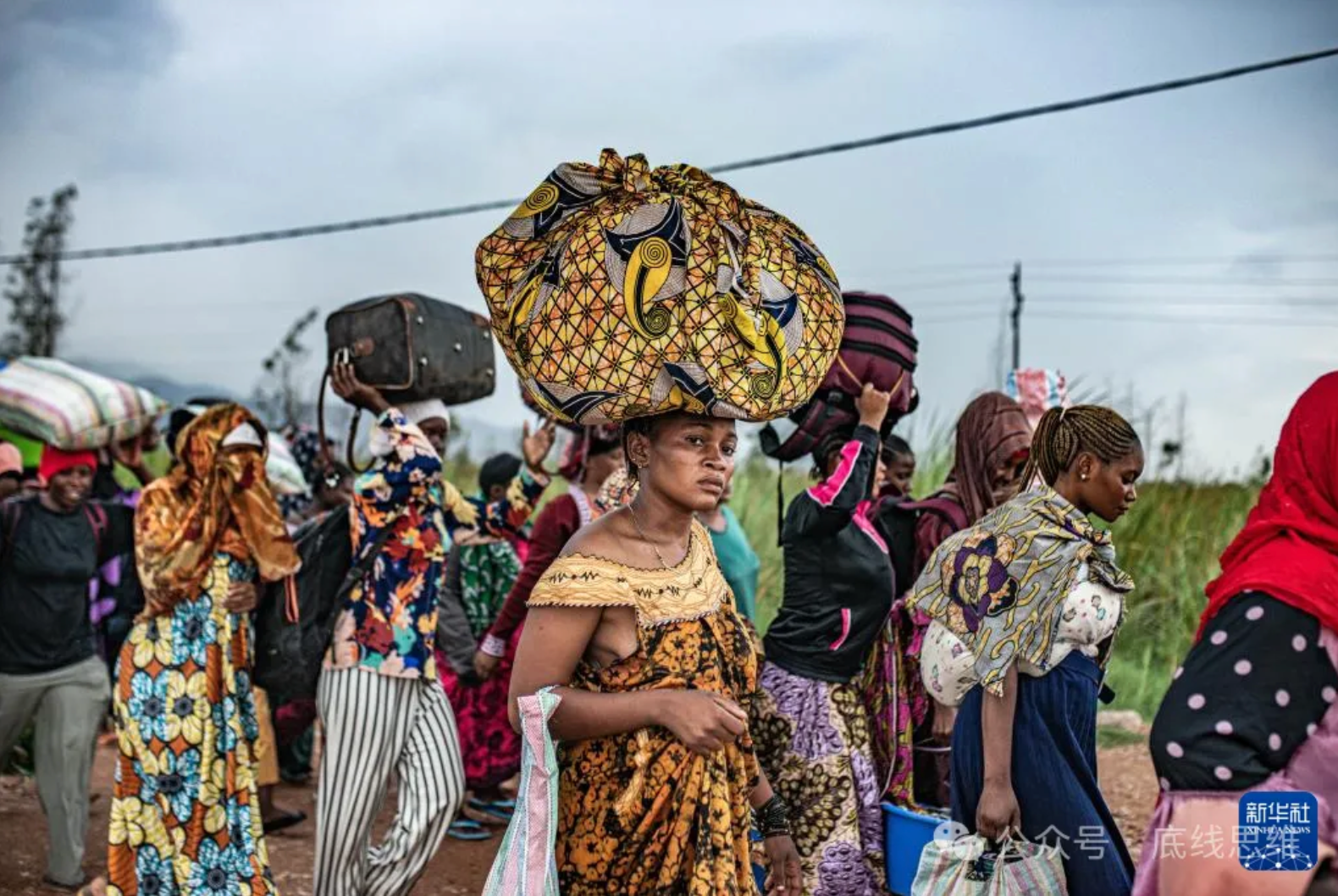
Eugene Uwimana: My personal perspective as someone who worked greatly in the Great Lakes region is that indeed, peace is very fundamental and is the foundation of development. And what you’ve been witnessing for the past three decades, is that it’s very challenging for the entire region. It’s not just for DRC or Rwanda or Burundi. It’s for the entire region, really the Great Lakes region, because one country cannot develop on its own. You need a free movement cooperation of people. You need peace to develop. So the most important thing really is not to dwell on, not on what is not working because even if the region has been facing those challenges, a lot of good. Progress has been made as well. So the balance, to strike the right balance is to look at humanitarian support various partners are providing. And politics will always be there. But I personally think that to bring people closer together, they have to share market. When people trade, when people exchange goods and services. They can better cooperate.Because handling these issues cannot be only done on the political scene. You have to have people share something. For example, when you’re sharing food, we can talk, we can discuss. Politics will be there. But I think we have to tackle also the economic aspect of it. And then once you have some projects, economic projects that you’ve been working jointly, you can better communicate on those results from those projects. I think that’s the balance I would strike if I was to communicate about what’s happening in the Great Lakes region, absolutely. And speaking on potential cooperation in future projects.
2. China-Africa Cooperation: Two Starkly Contrasting Narratives?
Guancha.cn: Yourself having worked for a multitude of world class media organizations, can you give us some insights on why western media tend to fixate on the friction that occurs within Chinese African relations while ignoring the real and positive results like those between China and Rwanda?
Eugene Uwimana: Well, that’s a very good question. I worked with the Voice of America and the European Press Agency. I also worked to the Turkish Radio television and the Xinhua. So I have this kind of understanding from those different media houses I worked with. The narrative that is produced around China’s intervention in Africa, I think is wrong because China is doing a lot of good things in Africa. Not only in Africa, but China is playing a very important role in the global affairs, balancing at least the global affairs. So it’s understandable. China is the second largest economy in the world. And it means that it has definitely its competitors, right? And communications and journalism are very important and critical elements of balancing the global powers and all of that. So what I’ve realized is that not only about China, but countries in Africa, western media houses tend to only put out what’s not working. For example, what do you know about Somalia? It’s about, mostly people know Somalia. About al Shabaab and Terrorist groups. But there is a lot of good progress happening in Somalia. For example, Mogadishu is a very beautiful country. You could talk about any African country whatsoever. You will realize that the narrative that is put out, it’s a little bit negative, but actually there’s tangible. A positive progress happening on the continent, and that’s where the, My Media House comes in because we try to enhance the visibility of the progress the continent is making because we have to tell our own stories. If we wait for others to tell our stories, they tell the stories which fit their interests. But this is where we come in, especially in the global south, through South cooperation, making sure that we are telling our own stories because we know better what’s happening. We’ve been in the global south all our lives. So I think we’re important agents of changing the narrative that is put out, not only on China, but also on Africa as well. Because I very truly believe that it’s unfortunate that the editorial lines of some media houses tend to really only pick up that dust, that what’s not perfect. And that’s what you’ll be seeing on the mainstream media.
3. China: A Partner Who Always Stands Behind You
Guancha.cn: You used to be the communication specialist for the UN Food and Agricultural Organization in Rwanda. So from your experiences, how does Chinese agricultural projects and technologies impact local communities?
Eugene Uwimana: I would just give you an example. I remember that there was a project that was a technical assistance from China. And there was integration of rice and fish farming. It was very new, and they told us that’s something that has been done for many years in China. Well, as you could have fish pond here, rice farms there. Now they’re bringing everything together. From the same farm, you’re getting rice and fish, and you are advancing better nutrition. So China is really a role model in so many things, especially in agriculture, bringing a new technology. Because China is a very big country with 1.4 billion people. So, obviously, you have best agricultural practices to share because when you have so many people, you have to feed them, right? So China is a very important, you know, partner in agriculture because Africa is trying to strive to changing the way that people do farming and agriculture. It’s no longer about subsistence agriculture, but it’s farming as business, agriculture as business, how can you produce food that we consume, but also food that we can sell? Because it has to be a very viable business. For example, in Rwanda, 70% of the population are involved into agriculture. So when you have that big part of the population involved in agriculture, it has to be a very profitable business. And that’s something you can learn from China, and China is really doing great. And by the way, I hope you know the director general of FAO is Chinese. So China is a very important partner in promoting agriculture and farming as business. That’s really awesome to hear. And if the experience is so positive, do you believe the United Nations should play a role in promoting the positive side of the positive experiences that you’ve just described about? Well, once again, I put up a disclaimer that I’m not speaking on behalf of the United Nations.
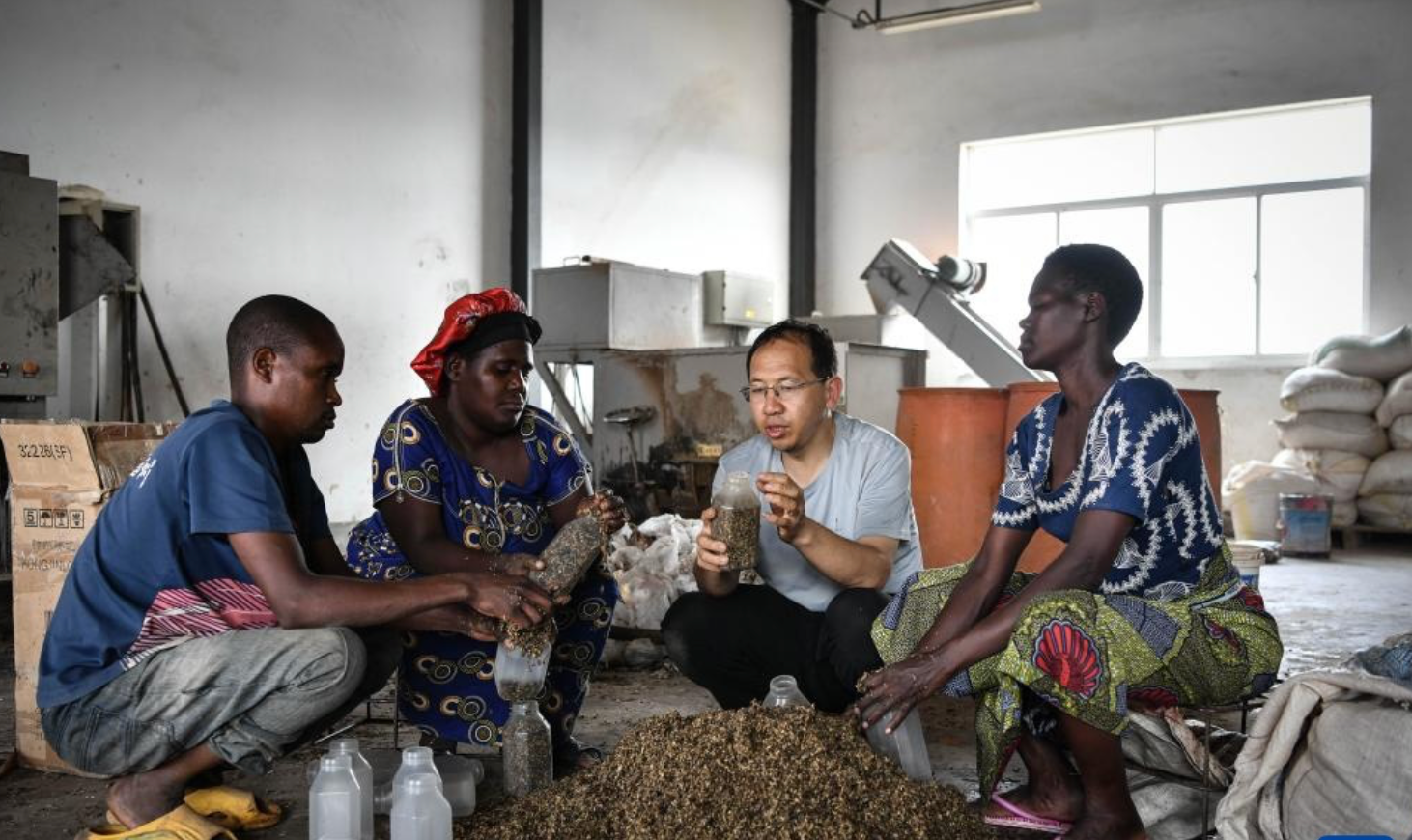
4. Humility and respect for other countries are Chinese virtues.
Guancha.cn: Do you think the United Nations should play a role in promoting China’s positive experiences?
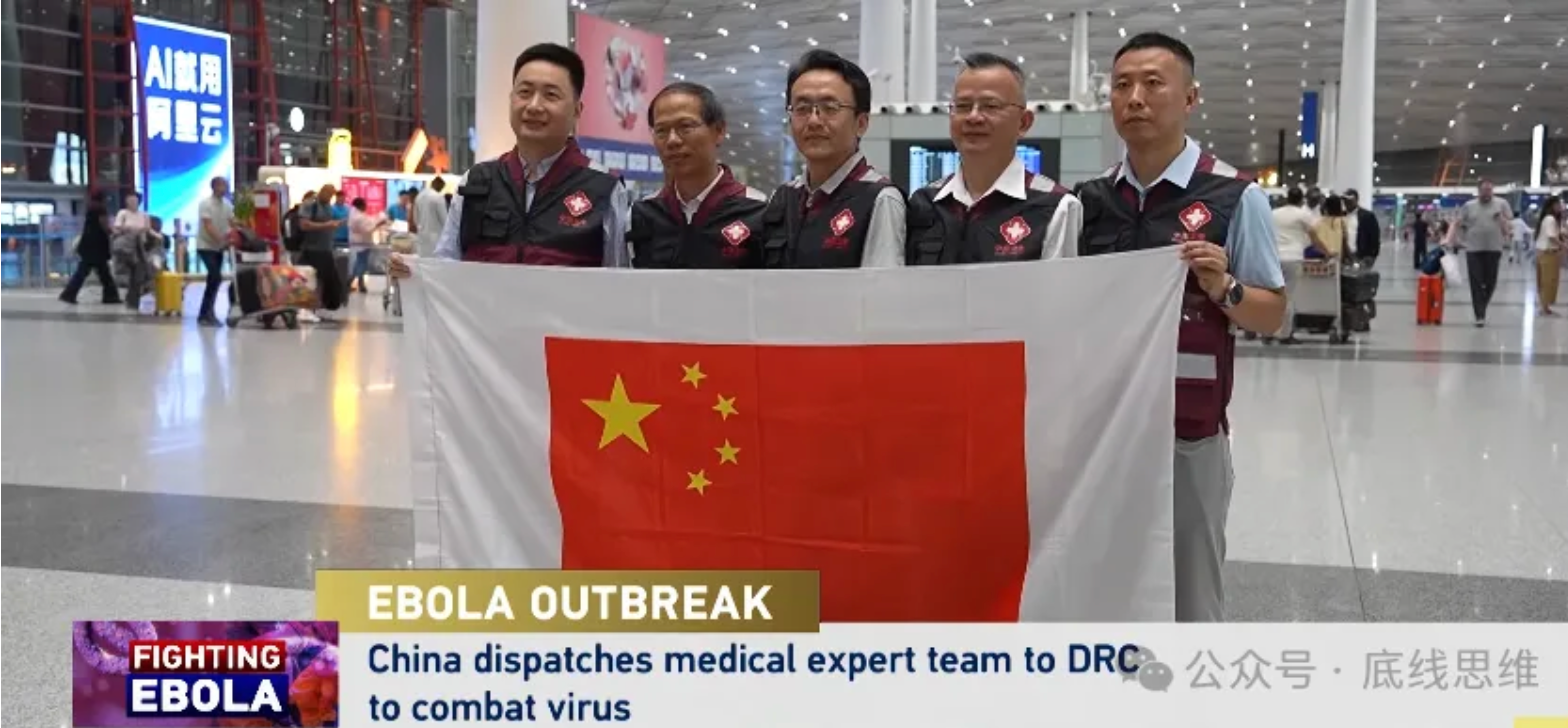
Eugene Uwimana: As someone who, you know, worked greatly in Africa. I’ll give you, in my honest opinion, really, there’s a lot can be done to enhance the visibility of China’s contribution because I think China is doing a lot, but the communication is not really done better. That’s my honest opinion. Maybe it’s because Chinese are humble in nature and they like to support. Other partners, they would give you a project of $100,000 and half of the budget would go into communications. If they’re giving you, for example, 20 sacks of rice, they would write from the people of X country. So they try to brand more, you know, make noise more about little things they do. But China is very humble. But I think it’s about time that we work together to enhance the visibility of China’s support because to me, I think there’s there’s a big gap and what happens is you can have a noble cause. You can do a lot of good things, but when you don’t talk about them, people will not be aware of what you’re doing. And so to me, I think we’ve got to work together to use new media, to use social media platforms, to use social media influences around the globe, to use high profile, you know, leaders globally to talk about what China is doing. Because another thing I like about China is China is not just a developing partner. China is a corporation partner. There’s a difference. A corporation partner is a partner who is with you no matter what. Can I give you an example? You know, DRC is facing Ebola right now, but China sent medical doctors in DRC. There’s no other big country that sent any support of that sort in DRC. So China is a partner you would see behind you every single time. And secondly. I think China is a partner that will be with you, that will support you and do not impose on you some of the conditions of what you have to fulfill. So they can be able to support you. Other partners, they would give you this, but say”Wait. Hold on. Before I give you this, you have to do this and that.” What does it mean that they are meddling in your internal affairs and they are disrupting your own internal plans? And when you have those kind of partners, you end up having so many tiny projects. That cannot really give results that you want. But what I’ve seen in the field for so many years, China is a partner who would follow your plans. So many countries, I think every country actually has a developing plan. For example, in Rwanda. We have the National Strategy for Transformation Phase 2, which is under three pillars, economic transformation, social transformation and transformation of governance. So once we have that blueprint of where you’re going, then we have a corporation partner who we say, alright, are we support that plan? That’s a partner I need to keep. That’s a very important partner instead of having someone who would say, okay, I have this, but I don’t like those, a few things. Can you change those things. So I think it’s a story worth telling.
5. Only by being there in person can one truly understand where Rwanda’s unity comes from after the trauma.
Guancha.cn: As Rwanda celebrates its 32nd Liberation Day on July 4th. International media’s coverage inadvertently focused on Rwanda’s past traumas and tragedies. But as you know, Rwanda is more than its past. From your perspective, as a media professional, how do you think Rwanda can broadcast its current reality as one of Africa’s fastest growing nations to the world?
Eugene Uwimana: Before I answer that, I have to give you a few statistics. This is a country that two years ago life expectancy was 26 years. This is a country where the nominal GDP was $102 million and now is $17.5 billion. This is a country I think you can fully understand once you step in the country, it’s a beacon of hope, not only for Africa, but for the whole world. It has not only stabilized itself, but it’s now extending support to other countries. Rwanda’s soldiers are supporting Mozambique as we speak. Rwanda’s soldiers are supporting Central African Republic. There were in Barbados in the Caribbean to support. So it’s amazing what’s happening in Rwanda and what the leadership has been able to accomplish. And credit goes to the leadership because the leaders of Rwanda decided to bring every single individual together. Because it’s very difficult to bring people together after the genocide, the 1994 genocide against the Tutsi. It claimed more than one million innocent lives of Tutsi in just 100 days. Which means every day 10,000 people were being killed, including my father, unfortunately. So bringing people together, people who suffered that in heinous, you know, people who suffered that kind of deep trauma, bringing them together and having them to work together towards the development that we see in Rwanda, that’s a very big achievement. And congratulations to the government of Rwanda because they chose unity over anything else. And the great success, I believe, to my understanding and perspective, is that their leadership decided to go back in the history of Rwanda and then bring homegrown solutions because after the genocide, every institution, almost every institution was destroyed, including the judicial system. But I think maybe you know about gacaca courts. So we have traditional tribunals. The government went back in history and see how our ancestors used to resolve conflicts and issues, and they brought back gacaca courts and these traditional tribunals tried more than 1.9 million cases in a few years. And it’s not only provided justice but also reconciliation because the real issue was not punishing the criminals, but how are you going to have these people live together again in the harmony. So it was more about reconciliation and unity. And that’s what provided the results we’ve seen in Rwanda. And you can only see it being there. I invite you to visit Rwanda one day. It’s a very good country. So you ask the question, how can Rwanda make sure that the stories published are not only about the past, it’s through initiatives like what we’re doing, for example, what we do in AE news. Media group interview people, foreigners who live in Rwanda, and then we ask them, like you are doing business in Rwanda. What do you think? And through those insights, lived experiences of foreigners who are in Rwanda, we can konw that this is a great country. Doing business is very easy. It’s very secure. It’s peaceful. Institutions are very strong. Having those insights shared by foreigners who live in Rwanda, and have them shared, disseminated widely, I think it’s gonna be very helpful. And we plan on doing that in the entire continent of Africa. Because I really want one day to meet someone in Juba, South Sudan. And find someone who’s running a very successful business and ask him why are you here? What you know about South Sudan is that big is about wars. And then I would really like to bring out that kind of story, which tells me business can be done juba. So once we do that across the continent, we are going to contribute a little bit in changing the narrative on Africa. That’s wonderful.
6. “When Africa opens its doors to countries including China and Russia, what the West says no longer matters.”
Guancha.cn: And the thing you said about looking back to history to find indigenous solutions to problems. As you know, at the end of May 2026, Rwanda and Russia signed a Mou regarding cooperation on nuclear medicine and nuclear energy. But in response to a regular exercise of African sovereignty, western media tends to frame that as a shift, a Russian shift within Rwanda. Do you think these reporting are accurate? And if not, why do you think western media often misrepresent a regular exercise of African sovereignty as shifts of allegiance?
Eugene Uwimana: First of all, they’re wrong because these are very important partnerships. And if there’s a country that knows what it’s doing, it’s Rwanda. Before any partnership, before any Mou, they have made their analysis. So. They’re wrong. Because we know geopolitics very well. You know, Brazil, Russia, South Africa and China. That’s a very promising block and that’s going to provide a counter attack to some big countries in the west. I’m trying to avoid to mention names, but what I’m saying is it’s understandable if Russia makes a good move. Russia is in a very difficult condition right now, you know, via what’s happening in the Ukraine. Every single country in Europe, including the US, is after Russia. Obviously, if Russia does something with another country, they would paint it bad so that you understand, it’s all about propaganda. It’s all about making sure that their interests are served. And so I think that will always be there because one of the things, this is a question they asked to Nelson Mandela. I’m sure you know Nelson Mandela from South Africa. They asked him what he thought about Castro and Muammar Gaddafi and he said that. The issue about western leaders is that they think that their enemy should be my enemy. But that’s not the case. If the person is your enemy, that’s with you. There’s nothing that prevents me from being a friend of your enemy. So I think it’s about time that Africa needs to engage in fruitful partnerships from the mutual respect level because like I mentioned, much area, other countries come with conditions, we do this, but you have to do this. I think Africa is in a better position. This is a very big continent, 1.4 billion people. That’s massive. The first youthful continent globally. Africa is the future. So, and if Africa is going to move in that direction, they have to speak with one voice and then be regarded as partners, not as beggars. When you look at the global worth generation, you only see it one way. Africa provides raw material to, it’s from periphery to core. It has always been like that. You provide raw materials. And then they’re processed in Europe, they’re brought back to you. You pay how much? Six times higher. So I think it’s about time that Africa opens up for more partnerships, including Russia and China. It shouldn’t matter really what the West says. As long as this partnership with Russia serves our interest, we should go for it.
7. African countries are enjoying the dividends brought by China’s duty-free policy.
Guancha.cn: And as you know, during the recent trade changes between China and Rwanda, China removed tariffs, pretty much tariffs on African nations. Rwanda took special interest in that and took advantage of the e-commerce market. Do you think that experience can be replicated elsewhere in Africa, especially for other landlocked countries?
Eugene Uwimana: That’s a very good story in Rwanda, in Africa now, people are talking about it. China has lifted tariffs and it was very well received. And once again, you know, thanks to the leadership of China, especially President Xi Jinping. They’re very visionary. I’m reading his book “The governance of China”, and his thoughts are very amazing. The way he sees the world, China’s contribution and the global affairs is amazing. So come back to your question. African countries are enjoying this initiative, and I think it’s going to be a game changer. And indeed Rwandans are taking advantage of this. They’re exporting their goods to China and other countries in Africa as well. I was in Tanzania before I come here in China. And everybody is talking about this. Everybody is happy about this. And it’s gonna be a win-win situation really. And that’s what I like about China. It’s about business. It’s about mutual respect. It’s about win-win situation. And you talked about Rwanda being a landlocked country. The way Rwanda approaches partnerships, it’s in a strategic way to make Rwanda a land linked, not a locked land linked country. And obviously, with China’s initiative to lift tariffs gonna be very helpful not only for Rwanda, but also for African countries in general.
8. Breaking the Western narrative monopoly, Global South countries must build our own international media.
Guancha.cn: And last, see a little bit more questions on your personal experiences, having worked in multiple state level media organizations, have you ever experienced frustrations with how competitive dynamics between great powers? Purposefully or accidentally misrepresent experiences you know to be untrue? And if so, how have you reconciled the journalist ethics of factual reporting and the political agenda often associated with international coverage.
Eugene Uwimana: Well, I’ll be honest with you. These media houses, they put in a lot of money. I will be honest with you, a lot of money in a way that the editorial line has to be respected if you’re pitching a story to those media houses. For example, $800 per story, a video story of two and thirty seconds. Well, what can you do? For example, for a radio story, two minutes and 30 seconds, $150. What can you do? And that’s something that so many African journalists have been facing. Because you have these well paying media houses, you can see that the narrative they are pushing. You may not agree with it, but it’s a well paying job. Now what does it tell me? It tells me that it’s now that I’ve established my media company that I understand this. You’ve got to have people who are going to invest in private media houses. That whose editorial lines are to promote the progress, the visibility of the progress Africa and China are doing. So we have to have this either the private sector or governments, they have to put in money, unfortunately, because production cost a lot. This interview you’re doing, for example, you know I’m a journalist. I can tell you how much it costs for you to produce the cameras, the light, everything, the sound. You don’t get them for free. So I think there is a need to invest. I’ll give you an example. You can see the BBC World. Who funds BBC and you find BBC covering the whole world VOA just recently before it was closed by President Trump. It was covering the whole world broadcasting in local languages, in the kinyarwanda, in the kiswahili, in Mandarin as well. So who was funding VOA the US government and there was VOA had a program which promotes American culture, American way of life and all of that. And BBC, same thing. I think that you cannot ignore what those media houses did in people’s mindset. When you hear the US, when you hear England, that picture was in a way shaped by those big media houses. Look at Al Jazeera, for example. What would have happened if they didn’t have Al Jazeera? You could have an imbalanced story. The US media houses would be saying this, but you could completely miss. The other part of the story, because there’s always two sides, you know, of the coin. So that’s what Al Jazeera is bringing. So I really think that members of private sector and government, they have to invest in creating, establishing media houses. That is very well focused, oriented and determined to promote the visibility of the progress. African countries, China and the countries in the global south are doing. I know I spoke about VOA, for example, I worked for VOA. Now that it’s not, it’s no longer broadcasting, I think it gives an opportunity for any country which is financially stable to create something like that. I think it leaves an opportunity. I can tell you the first time I saw a Chinese person. I was 7 years old. I was in my village and Rwanda is very hilly, that we have a lot of hills. So it’s very difficult to build roads, very difficult. So you find that one in Rwanda, Chinese engineers are known to build roads, good roads on a difficult terrain. So they’re very good engineers. So in the morning, I saw Chinese people for the very first time. What they were doing, they were building our road. And then they were very friendly. We used to play football. I remember chatting with my friends, seeing them eating with two chopsticks. Now have that picture of me appreciating what Chinese engineers are doing in my village. Have another picture of some of me listening, for example, any western media house painting a negative image about China. That’s a conflict already in my mindset. It means I would come outside and not see Chinese engineers the way I should see them. I’m trying to show you how media very important, and I’m trying to show you how it is really very important to invest. In media, to invest in enhancing the visibility of the great job China is doing in Africa, the great job African countries are doing. Many people when they arrive in South Africa, they’re like, is this Africa? I mean, Africa is a good place, isn’t it? When people come to Rwanda, they’re, oh, well, what we knew was just a genocide. No, we’ve moved on. The country has developed. So there is a big opportunity really to seize the momentum and invest heavily and in promoting the visibility of what African countries and China and the countries in the global south are doing.
9. Guancha.cn: Being now as a professor at the East African University School of journalism. As a professor, what recommendations do you have for the next generation of young journalists, African and Chinese on how best to present our own narratives.
Eugene Uwimana: Well, first thing, let’s use our smartphones. You know, before we would only sit and wait. I remember when I first joined the media, I wrote 11 letters of application for internship Because we had 11 radio stations in Rwanda and there is one particular radio station I liked, which I worked for. Before you would write letters and wait for being given opportunity to go on radio, to go on air, to go on TV. I was a TV news anchor for so many years. But that era has gone. You have it in your hands. Take your phone wherever you live, take shots, film good stuff that you see in your region and you put it online. Now internet has made it free, has made it open. So when we are teaching students, we tell them, you know what, this is your time. Do you live in Hunan? Do you live in Changsha? Do you live in Zhenjiang? What do you see? Take your photo, take your phone. Take some shots and describe, tell the story. You’re not going to wait for any green light to publish that as long as your intention is to enhance the visibility of your own country, because that has to be the first thing. What is your intention? If your intention, if you’re passionate about showcasing the best of your country, you have the tools in your hand, use them. And then little by little, everyone in his or her own capacity, we can collectively in really tell a story of African. Countries and in China, and that can be replicated across. So every university I go to, I tell the students that we teach you basics, which shots to take, camera movement, how do you write stories, keep it short and simple and all of those, once you have those basics, please hurry up. Don’t wait. And as we gain popularity, you get followers. Eventually, mainstream media will also hire you. And then we give you jobs. But even then, if you can, invest in your own media company. And for example, now I’m the only investor in the company. I’m putting all resources, everything I have. But I’m very passionate.It doesn’t matter really if I get return because in media, it’s a business where you don’t invest today and get resources, get returns tomorrow. No, it takes time. But as long as you’re passionate about what you’re doing. Doesn’t matter. You are following your part, your dream. That’s what I’m doing and that’s what I would invite every single journalist on the planet to do.
10. Guancha.cn: Heard about your, you’re currently reading the work of President Xi Jinping. Do you have any thoughts would like to share?
Eugene Uwimana: Well, I’m doing my PhD in peace, governance and development. China is a great example of, you know, rapid economic transformation. China lifted 250 million people out of poverty in record time. So I had to read more about China. How did China do it? And remember my story about my first encounter with Chinese people. From that moment, I was like, when I was young, I really want to go to China. But then later I went on with life. I’ve sort of forgot. And then, but whenever I could see a Chinese book. I am always interest in reading the book, because I’m very curious to know how China does what it does because it’s phenomenal now. And then my friend in the Chinese embassy in Rwanda, because she knows that I’m doing my PhD in peace development and governance. And I’m interested in learning how China did it. So she gave me the book and I’m reading it. It’s very big, 620 something pages. But it’s so rich. It’s so rich. And if you would to ask me what I appreciate about the book. President Xi does not only talk about what is working well in China, he also talks about some of the issues and he tells people how to address them. That’s very important because you would find, you would think that a global leader like him would only be talking about success stories of his continent. No, he goes out to tell his people, the party, these are the issues you’ve got to work on. And for me, it’s very humbling and the book is very clear about Chinese characteristics. It’s very important. Because I believe that number one no single country can develop on aid. Number two, no single country can develop on importing concepts. You have to contextualize if well, you can learn from a neighbor from another country, but you cannot be translated and implemented immediately as it is. You have to contextualize because a country’s characteristics matter a lot. A country’s history, culture matter a lot. So, when I’m reading the book, I cannot tell you how many times. They mentioned that “we are a socialist country with Chinese characteristics”. To me, that’s very remarkable. And I think that’s what makes China, you know, a great country.
Editor: Zhao Yiwen